


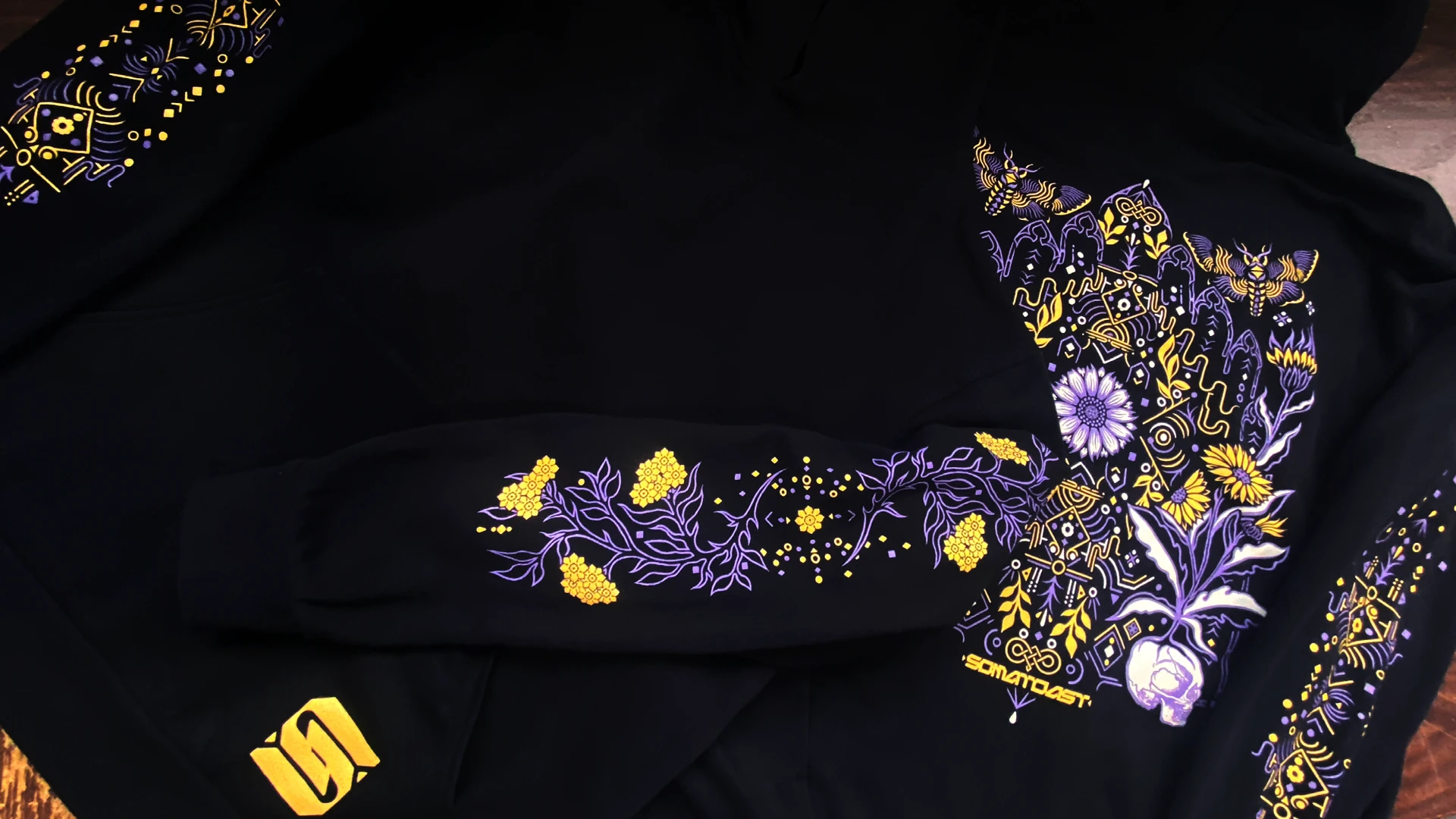
Starting a clothing brand is exciting. You've got your designs sketched out, your vision locked in, and maybe even a few pre-orders lined up. But here's where a lot of founders hit their first real obstacle: finding a screen printing partner who won't mess up your launch.
This isn't just about getting shirts printed. It's about finding a production partner who understands what's at stake when you're building a brand from scratch. The wrong choice here can cost you way more than money - it can cost you customers, reputation, and momentum when you need it most.
Think about it. You launch with 100 units. The prints crack after two washes. Your customers post photos on social media. Suddenly, you're not a promising new brand; you're the company that sold defective merch. That's the kind of setback that kills brands before they even get started.
Choosing screen printing company partners isn't something you should rush. Most successful clothing brands treat their printer relationship like a business partnership, because that's exactly what it is. Your printer's quality becomes your quality. Their turnaround times become your delivery promises. Their customer service becomes part of your customer experience.
So how do you make the right choice? Let's break down exactly what you need to evaluate, what red flags to watch for, and how to find a production partner who'll grow with your brand instead of holding it back.
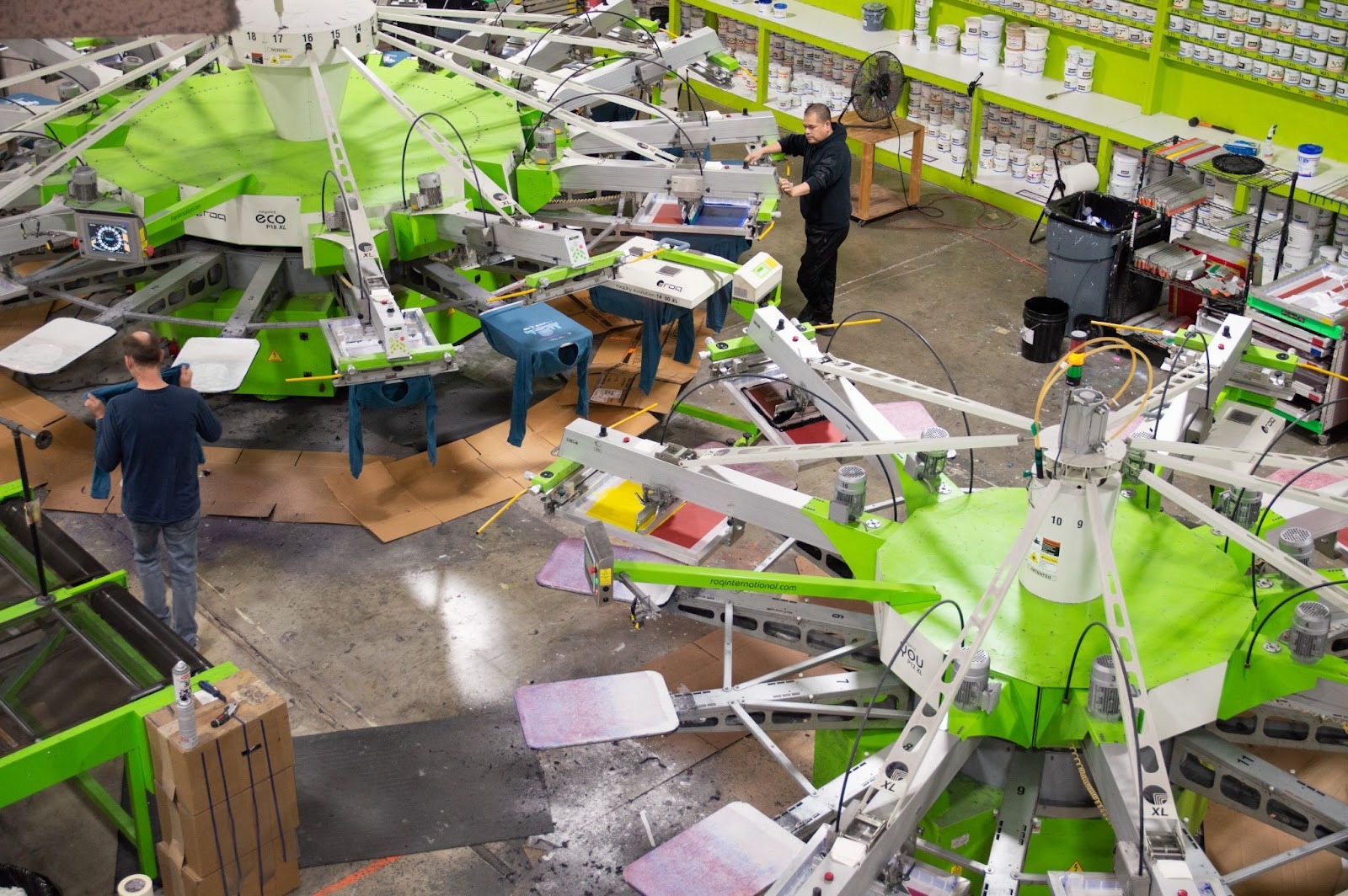
Here's what nobody tells you when you're starting out: your production partner will make or break your first year in business.
You can have the best designs in the world, but if your printer delivers late, your pre-order customers will cancel. You can nail your marketing, but if the shirt quality doesn't match your brand positioning, people won't buy twice. You can build hype on Instagram, but if the finishing looks amateur, you'll never be taken seriously as a premium brand.
The hidden costs of bad production partnerships add up fast. We're talking about reprinting entire orders because the colors were wrong. Paying rush fees to hit deadlines after your original printer flaked. Losing wholesale accounts because you can't deliver retail-ready products. These aren't rare scenarios - they're common outcomes when founders prioritize cheap pricing over reliable production.
Good screen printing services cost more upfront, but they save you money in the long run. When you factor in the cost of fixing mistakes, managing delays, and replacing defective products, partnering with a quality shop almost always works out cheaper. Plus, you're not spending your limited time firefighting production problems instead of building your brand.
When you're evaluating potential partners for choosing screen printing company options, you need a framework that cuts through the marketing fluff and focuses on what actually impacts your brand's success.
Not all screen printers can handle all types of designs. This matters more than most founders realize.
If your brand aesthetic leans toward photorealistic artwork or intricate gradients, you need a shop that specializes in simulated process screen printing. This technique uses halftones and multiple colors to reproduce detailed, full-color images. It's not something every printer can do well - it requires specific equipment, experienced separators, and skilled press operators.
For bold, graphic designs with solid colors, standard spot color printing works great. But here's the catch: many shops limit you to 4-6 colors per design. If your artwork needs 8-10 colors to look right, you need to find a printer who can accommodate that without compromising quality.
Here's what to verify about technical capabilities:
Don't just take their word for it. Ask to see samples of work similar to what you need. If you're launching a vintage-style brand with soft, worn-in prints, you need to see examples of water based screen printing or discharge screen printing on garment-dyed blanks. If they can't show you relevant samples, keep looking.
This is where a lot of clothing brands get tripped up. You focus so hard on the printing that you forget about everything else that makes a product retail-ready.
Professional apparel finishing services include things like custom printed neck tags, hem tags, hang tags, and fold-and-bag services. These details seem small, but they're what make your product look like it belongs in a boutique instead of a swap meet.
Think about your customer's unboxing experience. They open the package. Is your shirt folded neatly in a poly bag with your custom hang tag attached, or is it wrinkled in a plain plastic sleeve? Is there a printed size tag in the neck with your brand name and logo, or is there a generic manufacturer tag that they'll want to cut out immediately?
Here's what matters in finishing services:
The shops that offer full finishing services understand retail. They know what buyers expect when they're considering your brand for their store. They know what customers expect when they're paying premium prices for your products.
If a printer doesn't offer finishing services, you'll need to handle these details yourself or find a third-party fulfillment partner. That adds complexity, cost, and room for error. For most emerging brands, working with a full-service shop makes way more sense.
Every screen printer has minimums. The question is whether their minimums align with your brand's stage and cash flow.
Most quality shops set minimums around 50 pieces for standard designs with fewer than 7 colors. For more complex work like photorealistic prints with 7+ colors, minimums often increase to 100 pieces. There's a good reason for this: screen printing requires setup time, screen preparation, and color mixing regardless of whether you're printing 10 shirts or 1,000.
Some shops advertise lower minimums, but when you dig deeper, you'll find catch-22 situations. They'll print 25 pieces, but only if you use their limited garment selection. Or they'll do small runs, but the per-piece price is so high that you'd be better off hitting the 50-piece minimum at a better shop.
Here's how to think about minimums strategically:
For your first production run, 50-100 units per design usually makes sense. It's enough inventory to fulfill pre-orders, have product for content creation, and stock a few sizes for immediate sales. It's not so much that you're drowning in inventory if a design doesn't perform well.
If you're testing multiple colorways or designs, make sure the printer's per-design minimum works with your budget. Ordering 50 units across 3 designs means 150 total pieces, which is a manageable first order for most emerging brands.
Watch out for shops that pressure you into massive orders to get "better pricing." Yes, per-unit costs decrease at higher volumes. But sitting on 500 units of inventory you can't move isn't a good deal - it's a cash flow problem.
Speed matters, but reliability matters more.
Most reputable screen printers work on a 10-12 business-day turnaround for standard orders. Rush services are available but cost extra. Here's what you need to verify: are those business days or calendar days? When does the clock start - when you submit your order or when they approve your artwork?
The shops that communicate clearly about timelines usually deliver on time. The ones that are vague about turnaround times or don't return emails promptly? Those are the ones that'll leave you scrambling when you've got a pop-up shop scheduled and no product.
Response time tells you everything. When you reach out with a quote request, how long does it take to hear back? A few hours? A day? Three days? If they're slow to respond when they're trying to earn your business, imagine how slow they'll be when they've already got your money.
Here's your communication checklist:
The best production partners treat communication as part of the service. They understand that you're not just ordering shirts - you're launching a brand, and timing matters.
Some warning signs are obvious. Others are subtle but just as dangerous for your brand's success.
If a screen printer only does printing and nothing else, that's a major limitation for clothing brands. You'll need to coordinate with multiple vendors to get retail-ready products, which means more complexity, higher costs, and more opportunities for something to go wrong.
Brands that scale successfully almost always work with full-service partners who handle everything from printing to finishing to packaging. The shops that only do one thing are usually serving a different market - promotional products, event merchandise, or contract printing for other companies.
Here's a red flag that catches a lot of founders: you get a quote, then you get your actual invoice, and suddenly there are setup fees, screen fees, color change fees, and other charges nobody mentioned upfront.
Some shops build setup costs into their per-piece pricing. Others charge setup fees separately. Neither approach is inherently wrong, but the pricing needs to be transparent from the beginning. If you can't get a clear answer about total costs before placing an order, that's a problem.
Watch out for shops that require you to fill out lengthy forms and wait days for a quote. In the era of instant information, that's usually a sign of outdated systems and slow processes. The shops that have their operations dialed in can provide accurate pricing quickly - ideally through an instant quote tool where you can see costs upfront.
Your garment choice is part of your brand identity. If a printer limits you to 5-10 basic styles in limited colors, that's a constraint on your creative vision.
Quality-focused shops typically offer access to thousands of garment styles from multiple manufacturers. They understand that one brand might need heavyweight garment-dyed tees while another needs lightweight ringspun cotton. They know that comfort colors, premium blanks, and budget-friendly options all serve different brand positioning strategies.
If a shop pushes you toward specific garments because "that's what we have in stock" or "that's what works best with our equipment," consider whether those limitations align with your brand vision or just their operational convenience.
Any established screen printer should be able to show you relevant work samples. If you're launching a streetwear brand and they can't show you examples of quality prints on heavyweight garments, that's concerning. If you need soft-hand water-based printing and they only show you plastisol samples, they might not be the right fit.
Similarly, if a shop won't provide references or seems defensive when you ask about their process, that's a warning sign. Reputable printers understand that this is a significant investment for emerging brands. They're willing to answer questions and prove their capabilities.
When you're seriously considering a screen printer, here are the questions that'll help you separate the contenders from the pretenders.
Start with the technical details:
These questions reveal whether they have the technical chops to execute your vision. A good printer will answer confidently and might even suggest improvements to your design for better printability.
If you're building a brand for retail distribution, these questions are critical:
The shops that excel at these details usually have experience working with clothing brands. They understand that your product needs to look professional from the moment a customer opens the package.
Get clarity on costs upfront:
A transparent printer will walk you through their pricing structure without hesitation. If you get vague answers or "it depends" responses to straightforward questions, that's a red flag.
Understanding who else they work with helps you gauge whether they're a good fit:
Shops that specialize in clothing brand production will have a portfolio that demonstrates that expertise. If most of their work is corporate promotional products or one-off event printing, they might not have the finishing capabilities or attention to detail you need.
Different stages of brand growth require different production partnerships. What works for your launch might not work two years later, and that's okay.
When you're just starting out, you need a printer who can work with smaller quantities without sacrificing quality. The 50-100 piece minimum range is realistic for most emerging brands. You're testing designs, gauging customer response, and learning what sells.
At this stage, flexibility matters more than rock-bottom pricing. You might need to make adjustments to artwork, change colorways based on early feedback, or add finishing details you didn't initially plan for. Working with a responsive, communicative shop that can accommodate changes is worth paying slightly more per piece.
Look for printers that offer instant pricing tools so you can experiment with different options without waiting days for quotes. The ability to see how costs change based on color count, garment choice, and quantity helps you make informed decisions about your product line.
Once you've validated your designs and have consistent sales, your needs shift. Now you're focused on consistency across reorders, maintaining quality as volumes increase, and potentially adding more complex finishing options.
At this stage, you might be ordering 200-500 units per design and introducing new products like hoodies, crewnecks, or custom hats. You need a printer with the capacity to handle larger orders while maintaining the same quality standards that helped you build your brand.
Partnership becomes more important than ever. You're not just a customer - you're a recurring client who needs reliable production schedules, consistent color matching across multiple orders, and a printer who understands your brand standards without constant oversight.
As your brand grows, the value of working with a full-service partner compounds. When one shop handles your screen printing services, finishing, and potentially even embroidery services or custom heat transfers, you eliminate coordination headaches.
You're not managing relationships with three different vendors. You're not paying shipping costs to move products between a printer, a finisher, and a fulfillment center. You're not dealing with finger-pointing when something goes wrong because everyone blames someone else in the chain.
One partner, one relationship, one point of contact. That simplification is worth a lot when you're trying to focus on marketing, sales, and actually growing your brand.
Use this framework to evaluate potential printers systematically. Rate each shop on these criteria, and the right choice usually becomes obvious.
Can they execute your designs with the quality and detail your brand requires? This includes:
If a shop fails on technical requirements, nothing else matters. Move on.
Do they offer the finishing services that make products retail-ready? This includes:
For clothing brands, finishing capabilities separate amateur production from professional results.
Do their minimums, pricing, and turnaround times work with your business model? Consider:
Misalignment in business logistics creates constant friction and stress.
How responsive, helpful, and proactive are they? Look for:
Great customer service turns production partners into true partners who care about your success.
Can they grow with your brand, or will you outgrow them quickly? Consider:
The best partnerships evolve as both businesses grow.
Here's something that surprises a lot of new brand founders: setup fees can significantly impact your actual costs, especially on smaller orders.
Some screen printers charge setup fees separately for each color or screen, which adds to the base per-piece pricing. Other shops, like Extreme Screen Prints, build setup costs into their per-piece pricing. You see the true all-in cost upfront without surprise fees. Neither approach is wrong, but transparent pricing helps you make accurate comparisons and budget correctly.
When comparing quotes from different shops, always calculate the total cost including all fees, not just the per-piece price. A shop with slightly higher per-piece pricing but no setup fees might actually be cheaper than one with lower per-piece rates plus additional charges.
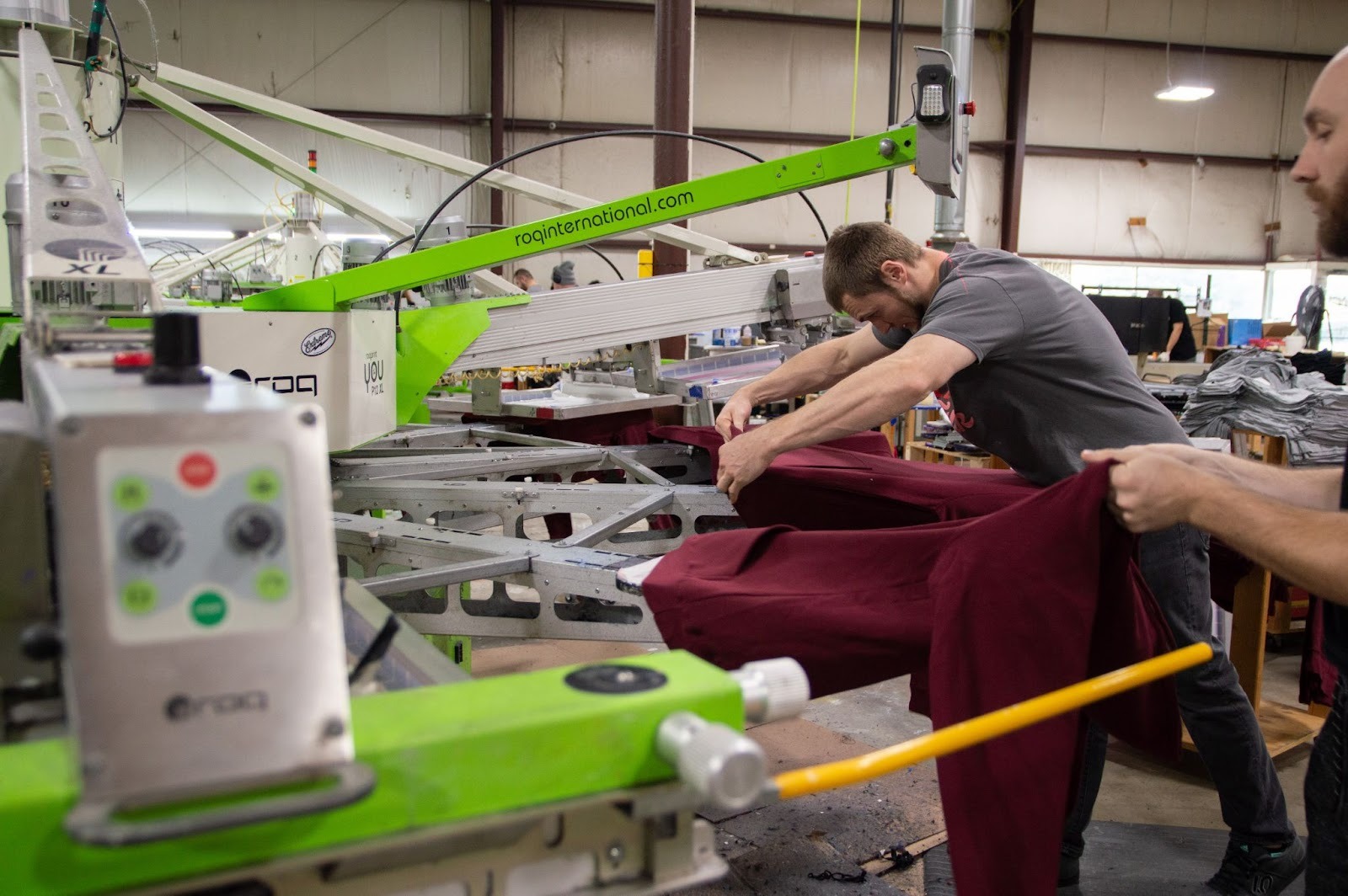
Let's talk about what happens when you choose poorly, because this is how you learn to choose well.
A founder we won't name launched with a printer who quoted the lowest prices. First order of 100 shirts arrived two weeks late - after they'd promised delivery for a scheduled pop-up event. Half the colors were off from the approved samples. The neck tags were crooked and poorly printed. No individual bagging, just shirts thrown in a box.
The founder had to explain to disappointed customers why there was no product at the event. Had to issue refunds and apologies. Had to reorder from a different printer at rush rates. Had to eat the cost of the defective first run because the original printer wouldn't redo it without charging full price again.
Total cost of that "cheap" first order when you factor in the redo, rush fees, lost sales, and damaged reputation? More than triple what it would have cost to work with a quality shop from the beginning.
That's the real cost of choosing screen printing company partners based solely on price. You're not just paying for printing - you're paying for reliability, quality control, and professional execution that protects your brand's reputation.
Here's what it comes down to: your production partner becomes part of your brand's story.
When you find the right printer, they're not just a vendor. They're the team that helps you execute your vision. They're the ones who make sure your product quality matches your brand promises. They're the partner who helps you scale from startup to established brand.
The shops worth working with understand this. They know they're not just printing shirts - they're helping founders build businesses. They take pride in being part of your success story.
So take your time with this decision. Don't rush into a partnership just because you're eager to get product in hand. Do your research. Ask the tough questions. Request samples. Talk to other brand founders if you can.
The right production partner will check all the boxes: technical capabilities to execute your designs, finishing services to make products retail-ready, transparent pricing without hidden fees, communication standards that keep you informed, and a genuine interest in your brand's success.
When you find that partner, you'll know. The process will feel collaborative rather than transactional. They'll offer suggestions to improve your designs for better printing results. They'll explain trade-offs honestly rather than just telling you what you want to hear. They'll deliver on time with quality that matches what they promised.
That's the kind of partnership that helps clothing brands survive and thrive.
Choosing screen printing company partners doesn't have to be overwhelming when you know what to look for. Use the framework in this guide to evaluate your options systematically. Focus on finding a full-service partner who can handle everything from printing to finishing to packaging.
Ready to evaluate production partners? Use our instant quote builder to see transparent pricing and capabilities for your specific project - no waiting, no sales calls required. Get started with your quote or reach out to our team with questions about your brand's specific needs.
Budget for your first order depends on several factors: garment quality, design complexity, and finishing services. For 50-100 units of quality garments with standard printing and basic finishing, emerging brands need to account for garment costs, printing fees, custom neck tags, and basic packaging. Complex designs with 7+ colors or premium garment choices will increase costs. Always get detailed quotes that break down garment costs, printing fees, and finishing services so you understand exactly where your money goes. Use instant quote tools when available to see transparent pricing before committing. Remember that going too cheap on your first order often costs more in the long run due to quality issues and reprints.
Spot color printing uses solid, opaque inks for each color in your design - think bold graphics with distinct color areas. It works great for designs with 1-6 solid colors and clean edges. Simulated process printing uses halftones and color mixing to create photorealistic images with gradients and shading. It's what you need for detailed artwork, photographs, or designs with subtle color transitions. Spot color has lower minimums (usually 50 pieces) and faster turnaround times. Simulated process requires more setup and expertise, so minimums are typically 100 pieces. Choose based on your design style: bold and graphic means spot color, detailed and photorealistic means simulated process.
Most quality screen printers prefer to provide garments rather than print on customer-supplied goods. There are good reasons for this: garment quality affects print quality, printers can't control what condition garments arrive in, and liability issues arise if something goes wrong with customer-supplied items. Some shops offer contract printing services where supplying your own garments is possible, but this typically requires higher volumes and acceptance of stricter policies. For emerging brands, working with a printer who sources and provides garments is usually the better option - you get quality control, simplified logistics, and protection if issues arise.
Plan for 10-12 business days as the standard turnaround time for most quality screen printers. Add extra time for your first order since artwork approval and sample processes might take longer. If you need product for a specific launch date or event, place your order at least 3-4 weeks in advance to account for artwork revisions, production time, and shipping. Rush services are available at most shops but cost extra and aren't always available during busy seasons. The brands that succeed in this space learn to plan production timelines well in advance rather than constantly operating in crisis mode with rush orders.
Minimum order quantities vary by design complexity. For standard designs with fewer than 7 spot colors, most quality shops set minimums around 50 pieces per design. For more complex work like photorealistic printing with 7+ colors, minimums typically increase to 100 pieces. These minimums exist because screen printing requires setup time regardless of quantity - screens need to be made, colors need to be mixed, and presses need to be configured. Some shops advertise lower minimums but charge significantly higher per-piece rates that often make hitting standard minimums more cost-effective. Calculate your total costs at different quantities to determine what makes sense for your brand's first order.

