


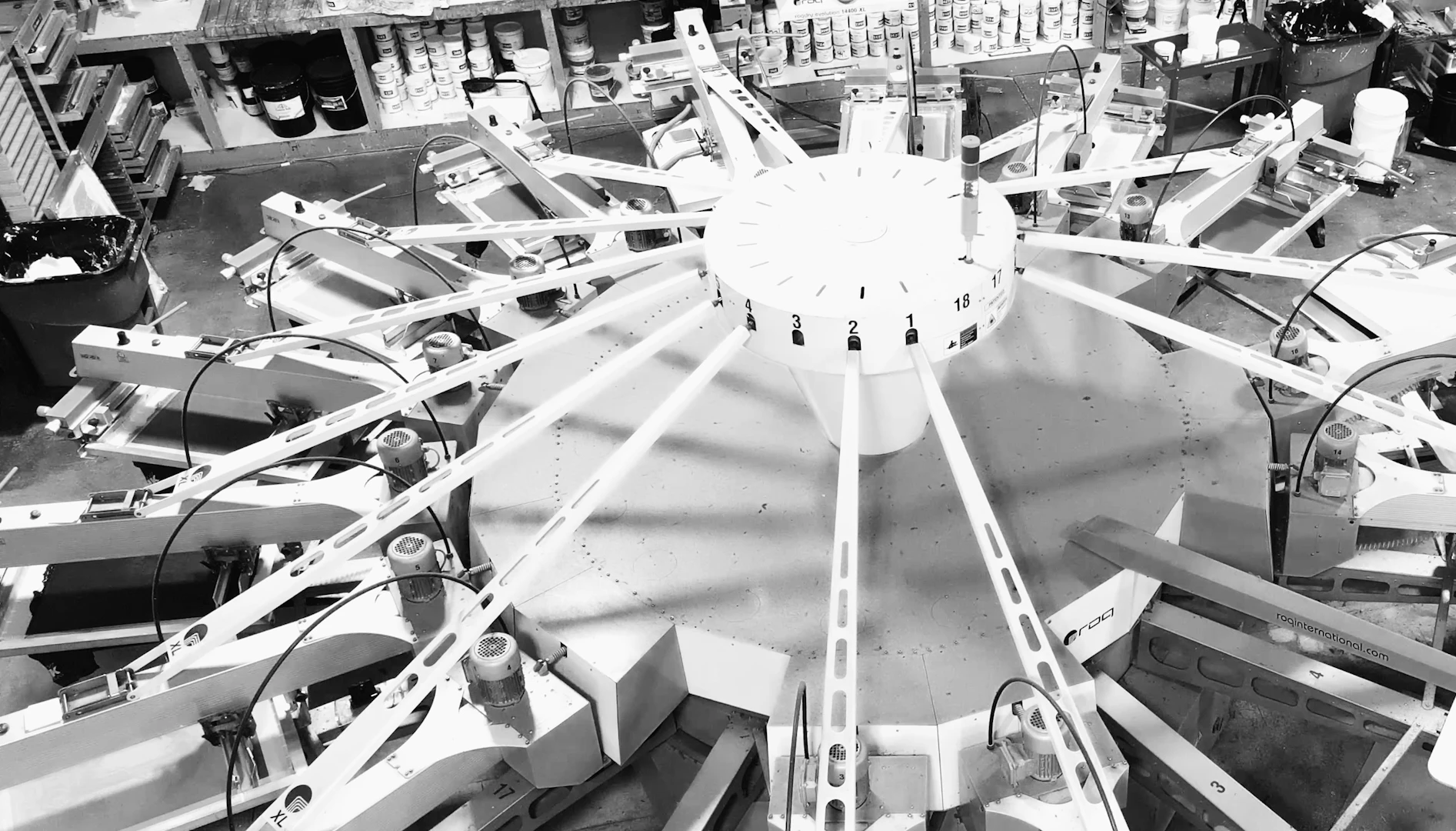
Every successful clothing brand starts somewhere. Maybe you began with a heat press in your garage, printing samples and testing designs with friends. Perhaps you partnered with a local shop handling small runs while you focused on building your audience and refining your aesthetic.
There's real value in these early stages - you learn production fundamentals, develop personal connections with your process, and maintain complete control over every detail. But there comes a tipping point where the very approach that got you started begins limiting your growth potential.
This is where understanding contract apparel manufacturing transforms from an abstract concept to a practical necessity. It's not about abandoning your hands-on roots - it's about strategically focusing your energy on what grows your brand while partnering with production experts who handle manufacturing at scale.
This guide breaks down how to recognize when you've reached that transition point, what contract manufacturing actually means for growing brands, and how to make the shift while maintaining the quality and authenticity your customers expect.
The transition from DIY or small local production to contract manufacturing isn't about reaching specific revenue numbers. It's about recognizing when your current approach limits growth more than it enables control.
Your early stage required different approaches than scaling requires. When you were printing small test batches to gauge market response, owning equipment or working with a friend's shop gave you speed and flexibility. You could experiment freely, adjust designs quickly, and keep costs low while building your initial audience.
That phase taught you production fundamentals. You understand how prints feel, what quality looks like, and how different garments behave. This knowledge becomes incredibly valuable when evaluating contract partners - you speak the language and recognize quality execution.
Several indicators suggest you're ready for the contract manufacturing transition, even if you're hesitant to change what's been working.
Time allocation becomes unbalanced. When you're spending more time managing production than building your brand, creating content, or developing new designs, production is consuming resources that should drive growth. Your highest value activities involve brand building and customer connection, not operating printing equipment.
Quality consistency becomes challenging. As volume increases, maintaining consistent quality across all production becomes harder. Variables you controlled easily at a small scale - thread tension, color matching, placement precision - multiply into complexity at higher volumes. Professional contract partners maintain these standards systematically across thousands of pieces.
Capacity constraints limit opportunities. When you turn down wholesale inquiries because you can't produce the volume, miss seasonal windows because production timing is too tight, or avoid marketing that would generate more demand than you can fulfill, capacity is constraining business growth.
Per-unit costs remain stubbornly high. Your DIY operation or small shop partner has fixed per-piece economics. As your volumes grow into the range where bulk pricing should improve margins, you're not capturing those economies of scale. Contract manufacturers with higher volumes access better garment pricing and production efficiency.
Cash flow gets tied up in inventory and equipment. Money locked in garment inventory, supplies, and equipment could fund marketing, new designs, or business operations. Contract manufacturing shifts this from fixed investment to variable costs aligned with actual sales.
Moving to contract manufacturing requires reframing how you think about production. You're not losing control - you're gaining leverage. You're not abandoning quality - you're partnering with specialists who maintain standards more consistently at scale than DIY operations can.
This shift means focusing your personal involvement on the creative and strategic elements that only you can provide, while trusting production partners to execute your vision professionally.
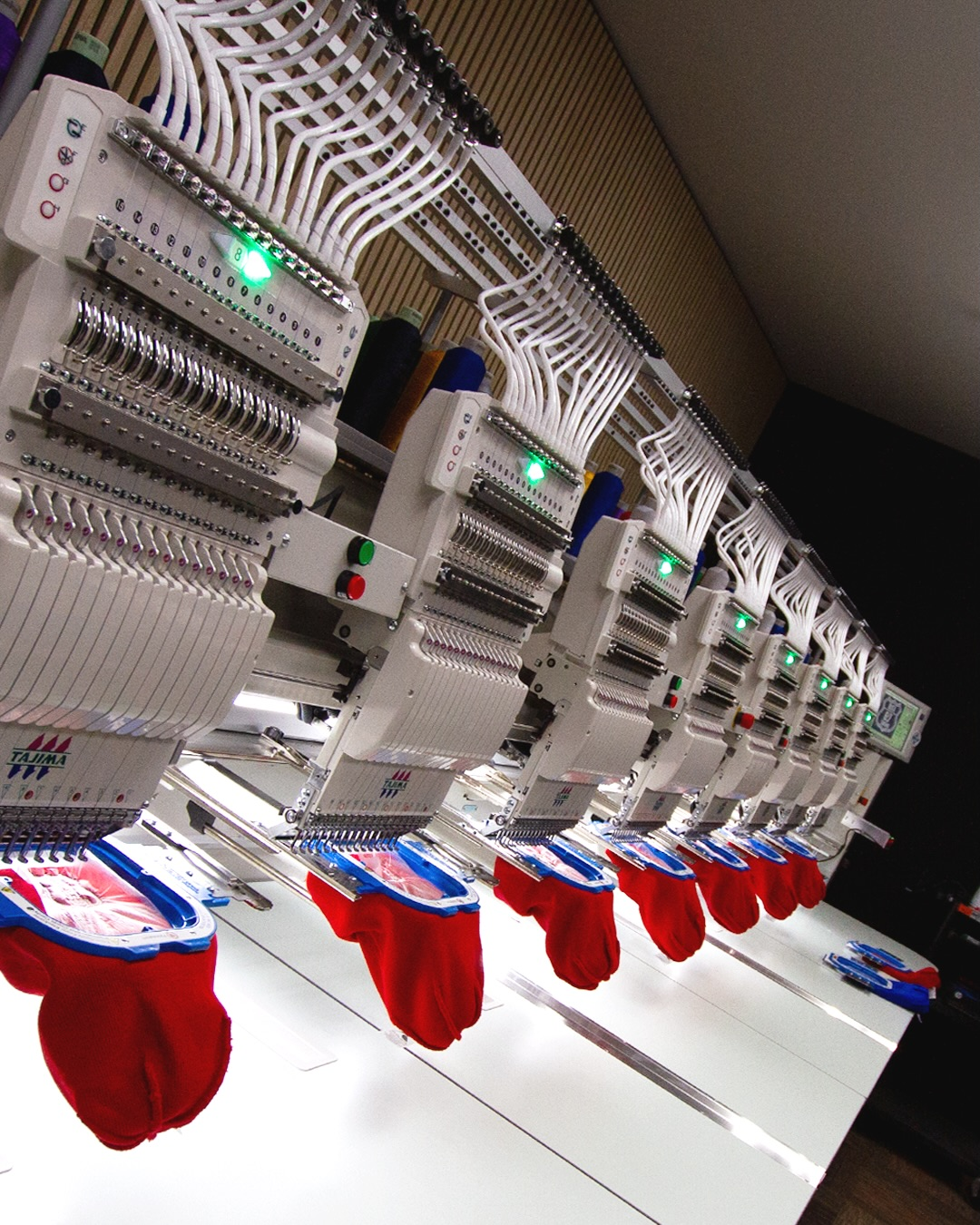
Understanding contract manufacturing beyond surface-level definitions helps evaluate whether it fits your brand's needs.
Contract manufacturing for apparel brands typically follows a build-to-print model. You provide designs, specify garments and decoration details, and establish quality standards. Your contract partner handles garment sourcing, production execution, and quality control, delivering finished products ready for your customers.
This differs from full private label manufacturing, where partners design products. You maintain creative control and brand identity - partners execute your specifications professionally at scale.
Contract screen printing services represent the most common entry point for clothing brands transitioning from DIY. Screen printing scales efficiently, handles complex designs well, and provides the professional finish customers expect from established brands.
Successful contract relationships involve a clear division of responsibilities. You control brand vision and creative direction, design development and artwork, quality standards and approval criteria, and customer relationships and brand positioning.
Partners handle garment procurement at volume pricing, production execution, maintaining your quality standards, equipment investment and maintenance, production staff and expertise, and quality control systems, ensuring consistency.
This division lets each party focus on its strengths. You build brand value while partners deliver production reliability.
Quality doesn't decline with contract manufacturing - it often improves through systematic processes and specialized expertise. Professional partners implement documented quality procedures, consistent execution across large volumes, systematic color matching and reproduction, and technical expertise in handling complex production challenges.
Your role in quality involves establishing clear standards, approving samples before production, and verifying that final results match expectations. Partners execute against these standards more consistently than DIY operations manage at scale.
Several practical factors indicate whether the timing is right for the contract manufacturing transition.
Calculate your actual production volume and ordering frequency. If you're consistently producing quantities that approach or exceed what DIY equipment handles efficiently, or if production cycles are compressing to the point where you're always behind, you've likely reached contract manufacturing scale.
Seasonal patterns matter too. Brands with concentrated seasonal demand benefit from contract partners with surge capacity, avoiding the fixed costs of owning equipment that sits idle most of the year.
Compare true production costs comprehensively. Include garment wholesale costs, decoration supplies and labor, equipment depreciation and maintenance, facility costs for production space, your time at a realistic hourly value, and opportunity costs from foregone growth activities.
When contract manufacturing total costs approach or fall below your true DIY costs - especially when you value your time appropriately - economics support the transition. Even if per-piece costs are slightly higher, the freed capacity for growth activities creates a positive return.
Evaluate the technical complexity of your production. Simple single-color designs are straightforward DIY. Complex multi-color artwork, photorealistic designs requiring simulated process screen printing, or specialty techniques like discharge screen printing benefit from specialist expertise.
If you're turning down design opportunities or simplifying concepts because current production capabilities limit execution, contract partners expand creative possibilities.
Consider growth capital needs. Money tied up in production equipment, inventory, and working capital could fund the marketing, content creation, and product development that drives brand growth.
Contract manufacturing converts fixed production investments into variable costs that scale with actual sales, improving cash flow for growth investments.
Not all contract manufacturers serve growing brands equally well. Specific criteria matter for brands in your growth stage.
Look for partners whose capacity range aligns with your current and near-term projected volumes. Partners focused on massive volume may not prioritize your orders. Those specializing in very small production may not scale with your growth.
The ideal partner handles your current volume professionally while having the capacity to support significant growth without requiring you to change partners again soon.
Verify partners can execute your aesthetic and design complexity. If your brand emphasizes soft-hand printing, partners need water-based screen printing expertise. If photorealistic designs define your style, simulated process capabilities are essential.
Request samples demonstrating their execution of similar complexity to your typical designs. Don't assume capabilities based on equipment alone - systematic execution quality matters more than just owning tools.
Evaluate quality management approaches systematically. How do they ensure consistency across production runs? What sample approval processes do they use? How do they handle color matching and reproduction?
Partners should articulate their quality procedures clearly. Vague assurances about "caring about quality" aren't sufficient - you need documented approaches proving systematic control.
As a growing brand, you need partners who communicate clearly and respond promptly. Evaluate communication during the exploration phase. Do they answer questions thoroughly? Do they provide realistic information about timelines and capabilities?
Partners who communicate poorly during courtship won't improve after you commit. Clear, honest communication is foundational to successful long-term relationships.
Many growing brands benefit from complete apparel finishing services - custom neck labels, hang tags, and individual packaging. These details elevate brand presentation and justify premium positioning.
Partners offering integrated finishing simplify coordination and ensure consistent quality across all brand touchpoints.
Strategic transition planning prevents problems and sets up long-term success.
Consider a gradual transition rather than immediately moving all production to contract manufacturing. Start with your highest-volume designs or most technically complex projects. Maintain DIY or local production for specialty items or very small runs during the transition.
This phased approach lets you build confidence in the partnership while maintaining continuity in areas where DIY still makes sense.
Document your quality standards, brand specifications, and production requirements clearly. This documentation includes approved thread and ink colors with references, placement specifications and measurements, quality criteria and acceptable tolerances, and brand identity elements requiring consistency.
Clear documentation prevents misunderstandings and provides objective criteria for evaluating production quality.
Implement systematic sample approval before full production, especially for new designs or first orders with new partners. Seeing and feeling actual samples prevents disappointments and ensures the final product matches your vision.
Approved samples become reference standards for production quality and can be used for marketing content before the full inventory arrives.
Contract manufacturing timelines differ from DIY, where you control scheduling completely. Build appropriate buffer time into your planning for production lead times, shipping transit, and potential minor delays.
These buffers prevent stress and create positive experiences when orders arrive on schedule or early, rather than constant anxiety about missing deadlines.
Understanding typical challenges helps you navigate the transition smoothly.
Many founders worry that contract manufacturing makes their brand less authentic or handmade. Reframe this concern: your brand authenticity comes from your creative vision, customer connection, and design aesthetic - not whether you personally operated the printing equipment.
Customers care about product quality, brand values, and the experience you create. Professional production enhances these elements by ensuring consistent quality and professional presentation.
Moving from hands-on production to partnering requires trust. Build this trust gradually through the phased transition approach, clear documentation providing objective control points, regular communication maintaining visibility, and sample approvals ensuring quality before commitment.
You're not losing control - you're exercising it differently through partnership rather than direct operation.
Contract manufacturers typically have minimum order quantities that might exceed your smallest DIY runs. Plan inventory strategically to align with these minimums, focusing on proven designs rather than experimental small runs, potentially combining multiple designs in single production runs when possible, and maintaining DIY or small local options for truly tiny specialty orders.
As your brand grows, minimums that seemed large initially become comfortable standard orders.
Transitioning from pay-as-you-print DIY to larger contracted orders affects cash flow timing. Plan for this transition by building working capital before committing to large orders, starting with smaller contract orders while maintaining some DIY capacity, and using proven designs with confident demand for initial contract orders.
The cash flow pattern normalizes as you establish rhythm with contract production cycles.
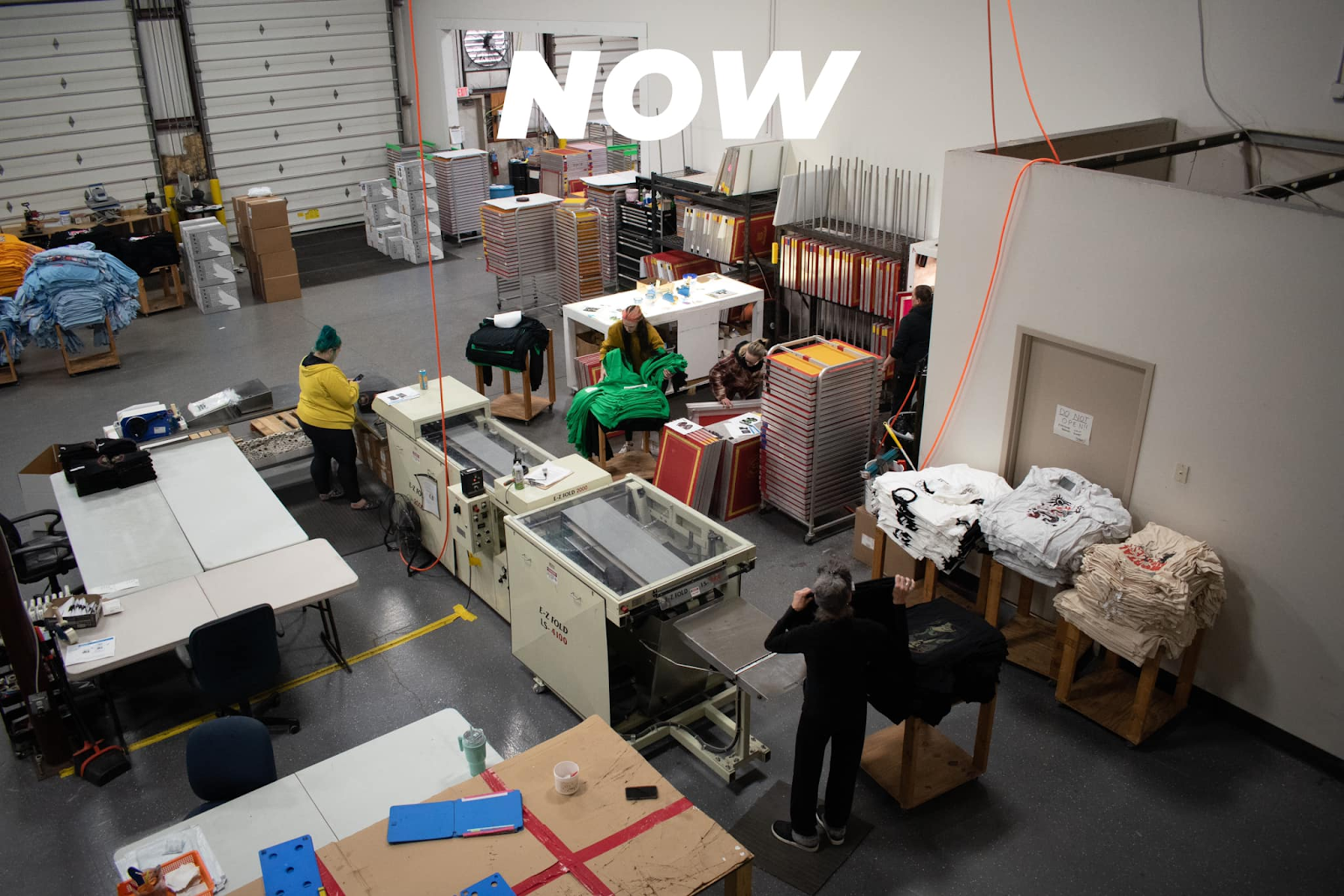
After a successful transition, ongoing optimization strengthens the partnership and business results.
Maintain regular contact with your contract partner beyond just placing orders. Share upcoming plans, new design directions, volume projections, and any challenges you're experiencing.
This communication helps partners serve you better by understanding your business context and planning for your needs.
As you scale, evaluate whether consolidating production with fewer partners improves efficiency and consistency. Working with partners who handle both screen printing services and finishing simplifies coordination.
However, maintain strategic backup capacity to ensure business continuity if problems arise with any single partner.
Your contract partners see production challenges across many brands. Leverage this expertise by asking for recommendations on garment selection, production technique optimization, and new capabilities that might benefit your brand.
Strong partnerships involve collaborative problem-solving rather than just transactional order fulfillment.
As your brand continues growing, anticipate when current partners might reach capacity limits or when your needs might require different capabilities.
Proactive planning prevents scrambling to find new partners during critical growth phases, allowing thoughtful evaluation and smooth transitions if needed.
The ultimate value of contract manufacturing isn't just operational efficiency - it's strategic focus.
Your unique value as a founder involves creative vision, brand storytelling, customer understanding, and market positioning. These activities can't be outsourced or systematized - they require your personal involvement and creativity.
Contract manufacturing frees your time and mental energy for these high-value activities by handling the systematic execution that others can perform professionally.
Founder burnout often comes from trying to handle every aspect of business personally. Production management is particularly consuming - it's detail-intensive, time-sensitive, and never-ending.
Delegating production to qualified partners prevents burnout by allowing sustainable work patterns focused on activities you find energizing rather than draining.
If you envision outside investment or eventual sale, contract manufacturing creates more attractive business models. Investors prefer brands whose value comes from intellectual property, customer relationships, and market position rather than founder-operated production equipment.
Systematized production through qualified partners demonstrates scalability and reduces key-person risk, making your brand more investable.
Transitioning from DIY or small local production to contract apparel manufacturing represents a pivotal growth moment for clothing brands. It's not about abandoning your hands-on roots - it's about strategically focusing your irreplaceable creativity and energy on brand building while partnering with production specialists who execute your vision professionally at scale.
Ready to explore your transition options? Contact Extreme Screen Prints to discuss how we support growing clothing brands with quality production, scalable capacity, and the finishing services that elevate brand presentation. Or explore our contract screen printing services to learn more about how we work with brands in your growth stage.
The transition point is less about specific revenue numbers and more about recognizing when production management limits growth. Consider contract manufacturing when you're consistently turning down opportunities due to capacity constraints, spending more time managing production than building your brand, finding it difficult to maintain quality consistency as volume increases, or when per-unit costs aren't improving despite growing sales. Some brands benefit from contract manufacturing at modest monthly volumes if production complexity is high or if founder time is better spent on growth activities. Others maintain DIY longer if volumes remain small and production is straightforward. Evaluate your situation based on opportunity costs, capacity constraints, and where your time creates the most value rather than waiting to hit arbitrary revenue thresholds.
Minimum order quantities vary based on production technique complexity and partner business models. Standard screen printing with straightforward designs typically has minimums that align with growing brand needs. More complex techniques requiring extensive setup generally need higher minimums to justify production preparation. When evaluating contract partners, discuss your typical order sizes and frequency to ensure their minimums fit your business model. Many partners serving growing brands structure minimums appropriately for your scale rather than imposing requirements designed for massive volume producers. Consider that proven designs with confident demand, making minimums is straightforward, while experimental designs with uncertain demand might stay with DIY or smaller local production until you validate market response.
Absolutely. Successful contract relationships involve appropriate founder involvement in the areas that matter most while trusting partners for systematic execution. You remain deeply involved in design approval and creative direction, quality standards establishment and sample approval, brand presentation and finishing specifications, and customer experience and brand positioning. Partners handle the systematic execution - garment sourcing, production operation, equipment maintenance, and quality control systems. This division lets you focus involvement on brand-critical decisions while delegating operational execution. Many brands visit their contract partners periodically to maintain a connection with production and build stronger partnerships through personal relationships.
Quality often improves with professional contract manufacturing through systematic processes that growing brands can't match. Ensure quality by establishing clear, documented standards before production begins, requiring sample approval for new designs and first orders, implementing regular quality reviews examining recent production, and maintaining open communication about expectations and concerns. Choose partners who articulate their quality control procedures clearly rather than offering vague assurances. Professional partners implement systematic inspection checkpoints, consistent production calibration, documented color matching processes, and experienced staff trained in quality execution. Your role shifts from personally executing production to establishing standards and verifying results, which often produces more consistent quality than DIY operations can maintain as volume scales.
Hybrid approaches work well for many growing brands. Consider maintaining DIY or small local capacity for specialty items with very small volume that don't meet contract minimums, experimental designs or limited releases, testing market response before committing to larger production, personal projects or collaborations with unique requirements, and rush situations where you need immediate production without lead time. Use contract manufacturing for proven designs with reliable demand that benefit from volume pricing, complex designs requiring specialized equipment or expertise, large orders supporting wholesale or major launches, and regular production allowing planning with appropriate lead times. This hybrid approach provides flexibility while capturing contract manufacturing benefits for the majority of volume. As your brand continues growing, the percentage handled through contract manufacturing typically increases naturally.

