


Managing corporate uniform programs requires more than selecting garments and choosing a logo placement. When your brand identity spans thousands of garments across multiple garment types, facilities, and reorder cycles, maintaining absolute consistency becomes a technical challenge that directly impacts brand perception.
This is where professional contract embroidery services become essential infrastructure rather than just decoration vendors. The right embroidery partner doesn't simply stitch logos - they maintain systematic color management, ensure consistent thread tension across diverse fabrics, and execute precise replication across years of uniform reorders.
This guide breaks down the technical considerations corporate branding managers must evaluate when selecting embroidery partners, how to structure programs that maintain consistency across complex uniform systems, and the quality control standards that protect brand integrity. We're talking about the operational requirements that separate professional corporate programs from inconsistent execution.
Understanding the technical complexity of consistent embroidery across corporate programs clarifies why standard decoration services fall short.
Corporate brand guidelines specify exact colors - typically Pantone references that must reproduce consistently across all brand applications. While Pantone standards work well for print applications, embroidery thread presents unique challenges.
Thread manufacturers produce colors that approximate Pantone standards, but exact matches aren't always available. Thread sheen, texture, and how colors appear when stitched create variations from flat color standards. Professional embroidery services understand these limitations and maintain systematic approaches to achieving the closest possible matches.
The challenge compounds when embroidering the same logo across different garment types. A thread that matches your brand color perfectly on white polo shirts may appear different on navy jackets due to fabric color show-through. Professional partners account for these substrate effects in their color selection and thread density specifications.
Corporate uniform programs typically include multiple garment types - polo shirts, button-downs, outerwear, caps, and bags. Each garment type requires different embroidery approaches for optimal results.
Knit fabrics like polos need different stabilization and stitch density than woven dress shirts. Structured caps require specialized hooping and techniques completely different from flat garments. Outerwear with thick fabrics needs adjusted thread tension and potentially different needle types.
Maintaining a consistent logo appearance across these varied applications requires technical expertise and systematic process control. The embroidered logo should look equally professional whether it's on a lightweight polo or a heavy fleece jacket.
Corporate programs involve substantial volumes across initial orders and ongoing reorders. Your employees need consistent uniforms, whether they're receiving items from the initial program launch or ordering replacements three years later.
This reorder consistency requires systematic documentation - thread color formulas, digitized file management, stitch count specifications, and placement measurements. Professional partners maintain organized systems that ensure accurate replication across time.
Without this documentation and process control, reorders may show subtle but noticeable differences that undermine uniform consistency and brand presentation.
Large organizations often coordinate uniform programs across multiple locations, regions, or divisions. Maintaining consistency across this geographic distribution requires centralized coordination and standardized execution.
Contract partners serving corporate clients must handle multi-location fulfillment while ensuring every location receives identically embroidered garments regardless of shipping destination or order timing.
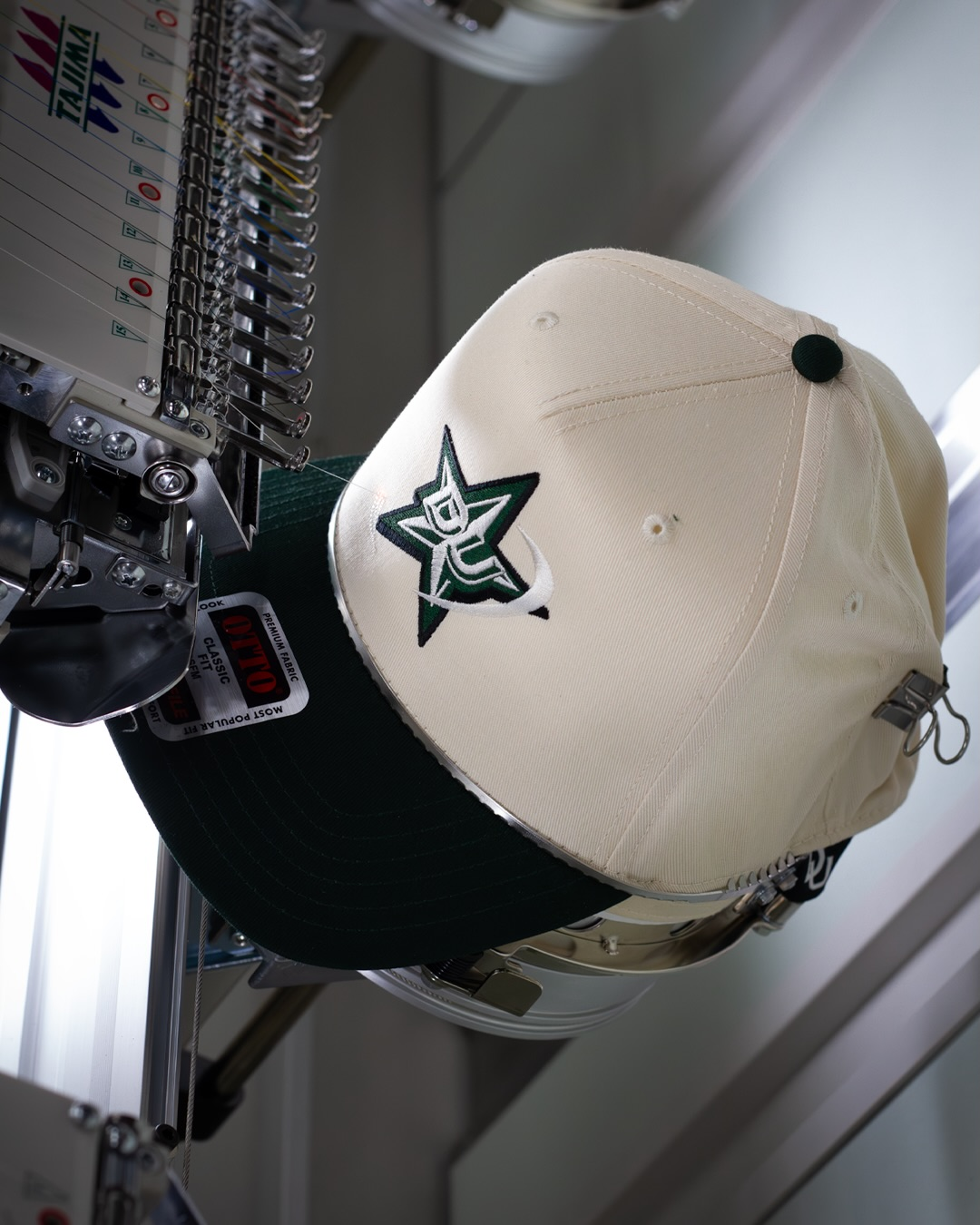
Several technical considerations directly impact whether embroidery maintains the consistency corporate programs require.
Embroidery digitization - converting artwork into machine-readable stitch files - fundamentally determines how logos reproduce. Professional digitization accounts for garment type, fabric characteristics, logo size, and desired appearance.
Poor digitization creates problems that surface across production - thread breaks, puckering, inconsistent density, or logos that don't match the approved artwork. Quality digitization from experienced professionals prevents these issues.
Equally important is file management. Your digitized files must be stored systematically with clear identification so reorders use identical specifications. Professional partners maintain organized digital asset libraries that support consistent long-term execution.
Thread quality directly affects appearance and durability. Professional embroidery operations use commercial-grade threads from established manufacturers - typically polyester or rayon, depending on application requirements.
These threads provide consistent color lot-to-lot, appropriate sheen for a professional appearance, and durability through repeated washing. Using consistent thread sources across all production ensures color matching remains stable over time.
Lower quality threads may save costs initially but create problems through color inconsistency, breakage during production, or poor wash durability that disappoints employees receiving uniforms.
Embroidery machines require precise calibration and regular maintenance for consistent results. Thread tension, needle condition, timing adjustments, and hooping pressure all affect final appearance.
Professional operations maintain systematic maintenance schedules and calibration standards. This rigor ensures machines produce consistent stitch quality across different operators, production runs, and machine heads.
Inconsistent machine maintenance creates variations in thread tension, stitch density, or registration that become visible when comparing garments side-by-side - exactly what corporate programs must avoid.
Proper stabilization prevents fabric distortion during embroidery and ensures logos lay flat without puckering. Different garment types and fabric weights require different stabilization approaches.
Lightweight polos might need a cutaway stabilizer for support. Structured outerwear may require minimal stabilization. Knit fabrics demand careful stabilizer selection to prevent fabric stretch from affecting logo dimensions.
Professional partners understand these relationships and apply appropriate stabilization systematically. This attention to technical detail prevents the quality issues that create inconsistent appearances across garment types.
Successful programs begin with clear standards that contract partners can execute consistently.
Corporate brand guidelines typically specify logo usage, color standards, size relationships, and placement rules. These guidelines must translate into embroidery specifications.
Work with your embroidery partner to document thread color selections that best match brand standards, approved logo sizes and placement positions, any simplified logo versions needed for small applications like caps, and quality standards for acceptable execution.
This documentation becomes the reference standard for all production and provides objective criteria for quality evaluation.
Before committing to full production, establish sample approval workflows. Initial samples verify thread color matching, logo sizing and placement, stitch quality and density, and appearance across different garment types.
This approval process catches issues before they affect large production runs. Approved samples become physical standards for production reference and quality control.
For programs involving multiple garment types, request samples of each type during setup. The techniques and appearance that work perfectly on polos may need adjustment for outerwear or structured caps.
Document approved thread colors with specific manufacturer color codes and lot numbers. This documentation enables consistent reorders and provides a reference when discussing color with your partner.
Understand that embroidery thread colors won't match Pantone standards exactly due to thread characteristics. The goal is to find the best available match and maintain that selection consistently across all production.
Some partners provide thread color cards or samples for brand approval, creating physical documentation of accepted colors.
Specify exact placement measurements and logo dimensions for each garment type. Left chest placement on polos, for example, might use specific measurements from the shoulder seam and the garment center.
These measurements ensure a consistent appearance across garment sizes and production runs. Clear specifications prevent interpretation variations that create subtle inconsistencies.
For complex programs involving multiple logo applications - left chest, sleeve, and back - document each placement completely with measurements and reference photos.
Systematic quality control protects brand consistency and ensures reliable execution.
Professional partners implement pre-production checks before starting large production runs. These verifications include confirming thread colors match approved standards, verifying digitized files are current and correct, checking garment inventory matches specifications, and reviewing placement and sizing requirements.
This systematic approach catches errors before they affect hundreds or thousands of garments.
During production, quality monitoring maintains consistency. Professional operations inspect regular intervals - checking stitch quality, verifying placement accuracy, confirming thread tension remains consistent, and ensuring no fabric puckering or distortion occurs.
This in-process control catches issues quickly, preventing large quantities of non-conforming production.
Before shipping, a comprehensive final inspection ensures quality standards are met. This includes verifying all garments are embroidered correctly, checking for any quality defects or inconsistencies, confirming quantities and size distributions match orders, and ensuring proper packaging and labeling.
Systematic final inspection prevents quality issues from reaching employees and maintains program credibility.
For very large production runs, statistical sampling methodologies ensure quality without inspecting every individual piece. Professional partners understand appropriate sampling rates and acceptance criteria.
This balanced approach maintains quality assurance efficiency while ensuring consistency across large volumes.
Corporate programs typically involve coordinating embroidery across diverse garment categories.
Each category presents specific considerations for consistent embroidery execution.
Polo shirts and knit garments require proper stabilization to prevent distortion. Thread density must account for the knit fabric structure. Placement needs careful measurement to ensure consistency across sizes.
Woven dress shirts accept embroidery well but require different stabilization than knits. Button placket proximity to left chest placements needs attention to avoid interference.
Outerwear and jackets involve thicker fabrics requiring adjusted machine settings. Multiple logo placements become common - chest, sleeve, and back. Liner considerations may affect placement options.
Structured caps demand specialized techniques completely different from garment embroidery. Logo sizing must work with the available embroidery area. Curved surfaces require specific digitization approaches.
Bags and accessories introduce additional substrate variations. Material weight, structure, and intended use all affect the embroidery approach.
Maintaining a consistent brand appearance across these categories requires strategic coordination. Logo proportions may need adjustment between applications while maintaining recognizable brand identity. Thread colors must appear consistent despite substrate color variations. Placement positions should create visual consistency even when exact measurements differ.
Professional partners provide guidance on these adaptations while maintaining overall program cohesion.
Large uniform programs often roll out in phases - by location, department, or employee level. Managing consistency across phases requires maintaining all specifications and quality standards from initial production through the final phase.
Your embroidery partner must maintain detailed records enabling exact replication months or years after initial production. This long-term consistency prevents situations where later phases look noticeably different from earlier phases.
Understanding how professional partners address frequent consistency issues helps evaluate their capabilities.
Dark fabrics can show through light-colored thread, affecting color appearance. Professional solutions include increased stitch density to improve coverage, underlay stitches providing a color barrier, or thread color adjustments accounting for substrate effect.
Partners experienced with corporate programs recognize this issue and implement solutions systematically rather than discovering problems during production.
Complex logos sometimes include small text or fine details that are challenging to reproduce cleanly at typical embroidery sizes. Professional digitizers determine minimum sizes for acceptable reproduction, create simplified logo versions when necessary for small applications, and adjust stitch techniques for optimal small-detail clarity.
This proactive approach prevents quality compromises or inconsistent detail reproduction across the program.
Different thread types and brands exhibit different sheen levels - from matte to high-gloss. This characteristic affects color perception and professional appearance.
Professional partners maintain consistent thread specifications across production, understand how sheen affects color matching to brand standards, and select appropriate thread types for corporate application requirements.
Improper technique causes fabric distortion - puckering, stretching, or warping around embroidered logos. Prevention requires proper stabilizer selection and application, appropriate thread tension calibration, correct stitch density for fabric weight, and suitable hooping techniques.
These technical fundamentals separate professional execution from problematic results.
Selecting embroidery partners for corporate programs requires evaluating specific capabilities beyond basic decoration services.
Corporate programs involve substantial volumes requiring adequate production capacity. Evaluate whether partners can handle your program scale, accommodate volume fluctuations across ordering cycles, maintain consistent quality at high volumes, and meet timeline requirements for large orders.
Inadequate capacity creates delays, quality compromises, or the inability to serve your program needs effectively.
Professional corporate embroidery requires specialized knowledge. Assess partners' understanding of thread color matching challenges and solutions, experience digitizing corporate logos for consistent reproduction, familiarity with diverse garment types and required technique adjustments, and capability to provide technical guidance on quality optimization.
Partners who discuss these considerations fluently demonstrate the expertise corporate programs require.
Systematic quality control distinguishes professional operations from basic services. Evaluate documented quality procedures and checkpoints, sample approval processes and standards, in-process monitoring and statistical control methods, and final inspection protocols before shipping.
These systems ensure the consistency of corporate brand management demands.
Long-term program success requires organized documentation systems. Partners should maintain secure digital file storage with version control, clear documentation of thread colors and specifications, detailed records enabling exact replication across time, and organized systems preventing confusion across multiple programs or clients.
This infrastructure supports reliable reorder execution years after initial production.
Organizations with multiple locations need coordinated fulfillment. Verify partners can ship to multiple destinations from single orders, maintain consistent quality across all shipments regardless of destination, coordinate delivery timing when synchronization matters, and handle location-specific variations when programs require customization.
These capabilities simplify program management while maintaining consistency.
Corporate uniform programs benefit from stable, long-term embroidery partnerships rather than transactional vendor relationships.
Document program standards comprehensively with your selected partner. This documentation includes approved thread colors with specific manufacturer references, digitized file specifications and storage locations, quality standards and acceptance criteria, placement measurements for each garment type, and special handling requirements or program-specific considerations.
This foundation ensures consistent execution across multiple years and personnel changes at either organization.
Develop efficient reorder processes that maintain consistency while minimizing administrative burden. Professional partners provide straightforward reorder procedures referencing previous orders, maintain inventory of approved garments, simplify ordering, store all program specifications for automatic reference, and proactively communicate any changes affecting consistency, like thread lot changes.
These systems make ongoing program management efficient.
Periodic program assessment ensures ongoing success. Reviews might address quality consistency across recent production, opportunities for process optimization or cost efficiency, upcoming program changes or expansion plans, and any emerging issues requiring attention before they affect consistency.
These conversations strengthen partnerships and prevent problems from developing unnoticed.
Corporate programs need continuity even when unexpected situations arise. Discuss contingencies with partners regarding backup production capacity for urgent situations, plans for maintaining consistency if thread sources change, approaches to handling rush orders without compromising quality, and communication protocols for problem situations requiring quick resolution.
This planning prevents crises from disrupting program consistency.
Modern embroidery technology supports better consistency and efficiency for corporate programs.
Professional digitizers use sophisticated software enabling precise stitch specification, automatic optimization for different fabric types, consistent output quality across digitizers, and detailed file documentation supporting long-term consistency.
This technology foundation ensures reliable technical execution.
Advanced operations implement color management technologies, helping achieve accurate thread color matching, document color specifications systematically, maintain consistency across different lighting conditions, and communicate color requirements precisely with clients.
These systems reduce the subjectivity in color-matching decisions.
Modern production management systems provide order tracking visibility for corporate clients, quality documentation and reporting, production timeline transparency, and the capability to manage complex multi-location fulfillment.
This visibility supports professional program management and accountability.
Understanding the return on investment from professional embroidery partnerships helps justify appropriate budget allocation.
Consistent, professional embroidery maintains brand standards across all employee touchpoints. This consistency supports brand credibility, reinforces a professional organizational image, prevents embarrassment from poor-quality execution, and ensures a uniform program achieves intended brand goals.
These intangible benefits justify investment in quality partners.
Quality embroidery creates uniforms that employees actually want to wear. Professional execution demonstrates organizational care about employee experience, durable embroidery maintains appearance through normal use, and consistent quality across all employees prevents dissatisfaction from variations.
Higher program adoption increases return on uniform program investment.
While professional partners may not offer the lowest per-piece pricing, total program costs often favor quality execution. Consider reduced costs from avoiding poor quality requiring replacement, efficient reorder processes minimizing administrative time, consistent execution preventing expensive corrections, and reliable delivery preventing emergency expediting costs.
These factors make professional partnerships economically sound in the long term.
Professional partners reduce risks inherent in corporate uniform programs, including brand inconsistency damage, quality problems affecting employee satisfaction, delivery failures disrupting uniform availability, and vendor relationship issues requiring program transitions.
Risk reduction value often exceeds cost differences between vendor options.
Contract embroidery services for corporate programs require more than finding vendors who stitch logos. Professional partnerships deliver the technical expertise, systematic quality control, and organizational infrastructure that maintain brand consistency across thousands of garments, multiple years, and complex uniform programs.
Ready to establish brand consistency standards that protect your corporate identity? Contact Extreme Screen Prints to discuss how we support corporate uniform programs with color-matching expertise, systematic quality control, and the documentation systems that ensure long-term consistency. Or explore our embroidery services to learn more about our approach to corporate programs.
Embroidery thread manufacturers produce colors designed to approximate Pantone standards, but exact matches aren't always possible due to thread material characteristics, sheen properties, and how stitched thread appears versus flat ink. Professional embroidery partners maintain comprehensive thread color libraries and use systematic approaches to identify the closest available matches to brand standards. The matching process considers how thread color appears when stitched at actual logo size, how substrate color affects thread color perception, and consistency available across thread manufacturer production lots. Once appropriate thread colors are selected and approved for a corporate program, professional partners document these selections with specific manufacturer color codes and maintain consistent sourcing to ensure ongoing color matching. Many partners provide physical thread samples for brand approval, creating tangible documentation of accepted colors for program reference.
Minimum order quantities for corporate embroidery depend on program complexity, garment types involved, and logo specifications. Professional partners serving corporate clients typically structure minimums to accommodate legitimate program needs rather than imposing arbitrary thresholds. Initial program setup often involves moderate minimum quantities to justify digitization and sampling investment. Ongoing reorders generally have lower minimums since setup work is already complete. Complex logos requiring extensive digitization or programs involving multiple garment types may have different minimum structures than simple single-logo applications. When evaluating partners for corporate programs, discuss your anticipated ordering patterns - initial volumes, typical reorder sizes, and timeline between orders - to ensure their minimum structures align with program needs. Professional partners understand corporate programs involve varying order sizes and structure their services accordingly.
The digitization timeline depends on logo complexity, size variations needed, and whether rush service is requested. Standard digitization for corporate logos typically requires adequate time for professional digitizers to convert artwork into optimized stitch files, test digitization on actual fabric samples, make any necessary adjustments for optimal appearance, and prepare documentation for production reference. Complex logos with fine details, gradients, or multiple colors need additional digitization time compared to simple text or basic graphics. Programs requiring digitization for multiple logo sizes or variations across different garment types extend the timeline accordingly. Professional partners provide realistic timeline expectations during program setup and can often accommodate expedited digitization when necessary. Once digitization is complete for a corporate program, those files remain available for all future production, eliminating this step from reorder timelines.
Corporate programs benefit from documented quality standards providing objective criteria for acceptable embroidery execution. Effective standards address thread color matching to approved samples and specifications; logo sizing and placement measurements with acceptable tolerances; stitch quality, including coverage, density, and appearance; absence of defects like puckering, thread breaks, or distortion; and consistency across all garments within orders and between reorders. Professional partners help establish realistic standards appropriate for program scale and application. These standards become contractual expectations guiding production and quality control. Request that partners document their quality control procedures, including pre-production verification, in-process monitoring frequency, and final inspection protocols. This documentation demonstrates systematic approaches to maintaining standards rather than ad hoc quality management. Regular quality reviews examining recent production against standards help identify any consistency drift requiring attention before problems become widespread.
Long-term consistency requires systematic documentation and file management practices. Professional partners maintain organized systems, including secure storage of digitized embroidery files with version control, detailed documentation of approved thread colors with manufacturer references, production specifications for each garment type and placement, physical samples as reference standards for quality comparison, and a comprehensive program history enabling accurate replication years later. These systems ensure that reorders placed months or years after initial production use identical specifications, producing consistent results. Professional partners also implement procedures for managing changes that might affect consistency - notifying clients if thread manufacturers discontinue colors, maintaining backup thread inventory for programs with specific color requirements, and proactively communicating any factors that could impact future production consistency. This infrastructure supports reliable program continuation regardless of staff changes at either the client or vendor organization.

