


You've built an engaged community. Your audience asks when merch is dropping. You've tested the waters with print-on-demand and seen decent sales. Now you're wondering if there's a better way to produce merchandise that looks more premium, feels higher quality, and actually makes you meaningful money.
This is where influencer merchandise printing through professional screen printing enters the picture. It's the scale-up moment when your merch program transitions from testing demand to building a real revenue stream with products your community genuinely loves wearing.
This guide breaks down everything content creators need to know about moving from POD to bulk screen printing production - realistic minimums, quality standards, launch timelines, and the finishing touches that turn basic merch into products worth premium pricing. We're talking about the production realities that separate successful creator brands from those that struggle with inventory and margins.
Print-on-demand serves an important purpose for creators just starting merch programs. Zero inventory risk, testing designs, and learning what your community responds to - these are legitimate advantages. But POD has limitations that become clear as your brand grows.
POD pricing makes sense when you're selling limited monthly volumes. But when you're moving significant units per design, the math changes dramatically. POD typically costs you a base tee plus printing, which leaves thin margins even at higher retail prices.
With bulk screen printing, your per-unit costs drop significantly at moderate quantities. A design that costs you a certain amount in POD might cost substantially less per unit through bulk screen printing. This margin improvement isn't just about profit - it's about reinvesting in better products and marketing.
Your audience becomes more discerning as your brand matures. Early supporters might overlook slightly stiff prints or inconsistent quality. But as you attract broader audiences and charge premium prices, quality expectations rise.
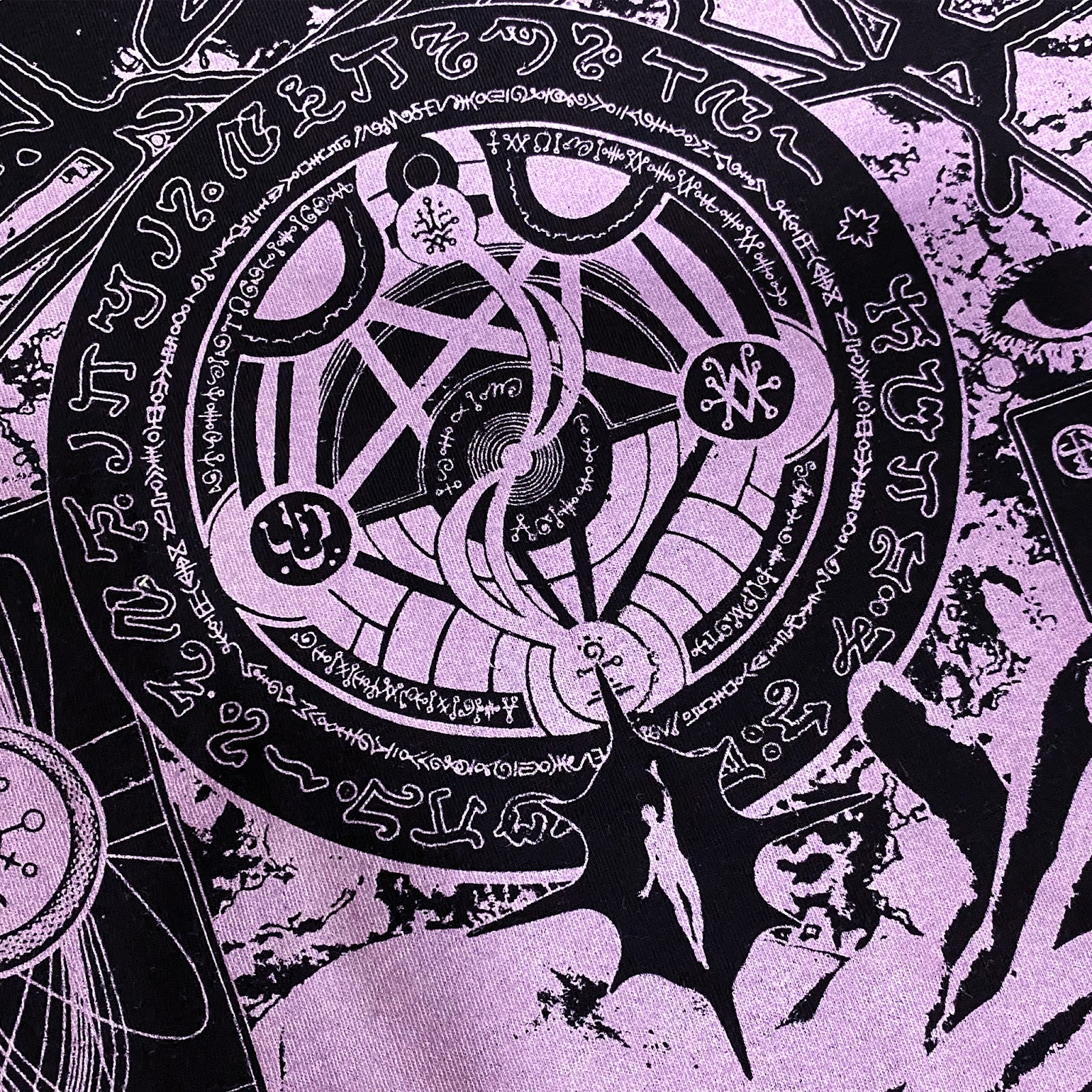
Screen printing - particularly techniques like water-based screen printing or discharge screen printing - delivers a softer hand feel, better durability, and a more professional appearance than typical POD output. This quality difference justifies higher retail prices and reduces returns or complaints.
POD fulfillment happens on demand, which sounds ideal until you're planning coordinated launches. When you want to announce a drop, create launch content, and have everyone receive their orders within a similar timeframe, POD individual order processing doesn't work well.
Bulk production lets you plan inventory for specific launch windows, coordinate your marketing timeline, and control the entire fulfillment experience. You can shoot content with actual products, create unboxing videos that match what customers receive, and time your launch for maximum impact.
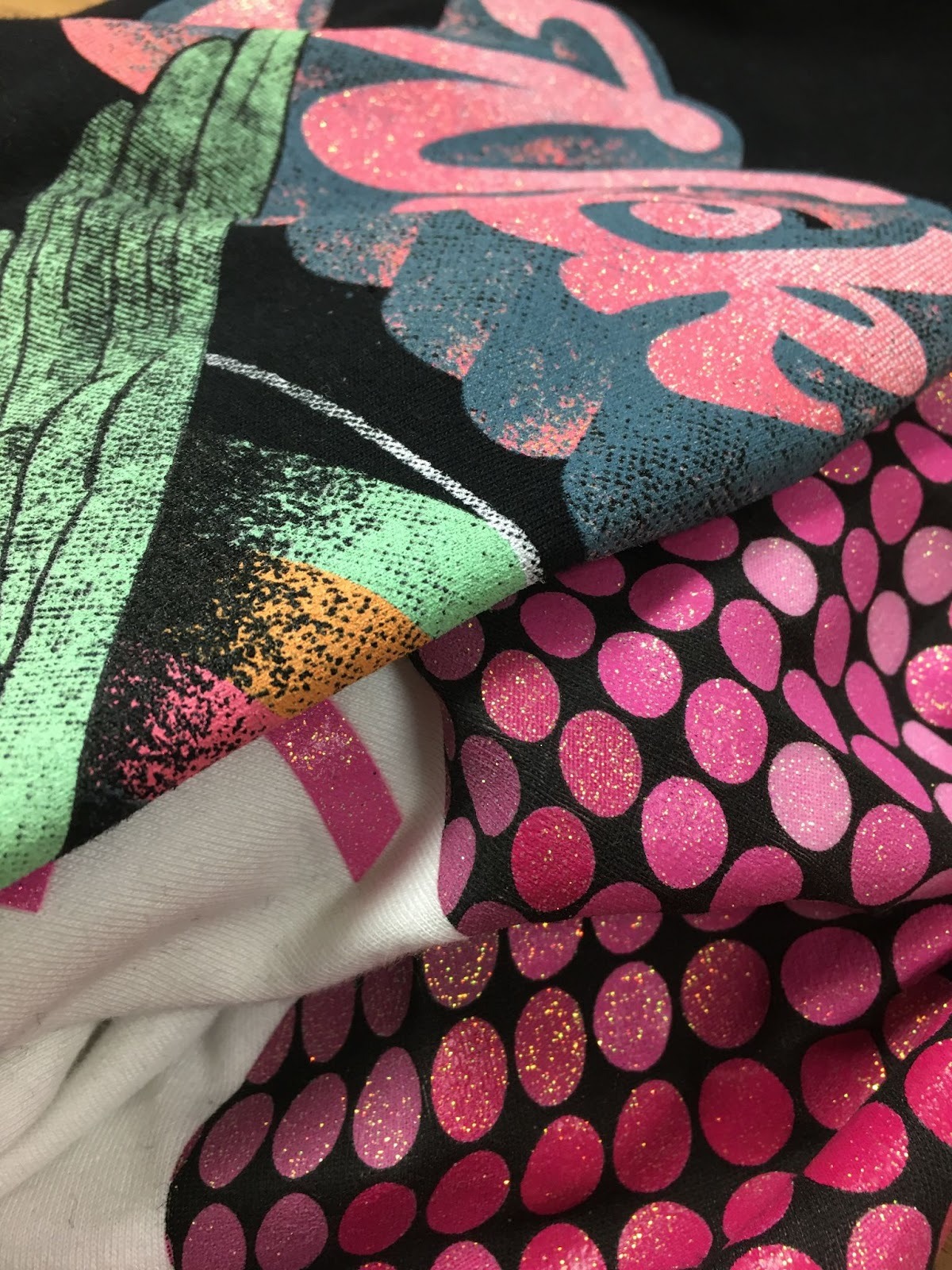
Complex designs with gradients, photorealistic elements, or subtle color work often don't translate well to basic POD printing. If your brand aesthetic requires sophisticated printing techniques - like simulated process screen printing for photorealistic artwork - POD limitations become frustrating.
Professional screen printing handles complexity that POD struggles with: fine detail, color accuracy, special effects, and techniques like discharge that create unique vintage aesthetics.
The biggest mental shift from POD to bulk production? You're buying inventory upfront. This requires confidence in your sales projections and comfort holding some stock. If you're consistently selling out POD designs and have historical data showing reliable demand, you're probably ready for this transition.
Screen printing minimums vary based on design complexity and printing technique. Understanding these minimums helps you plan inventory strategically rather than getting stuck with excessive stock.
Basic screen printing with one to a few colors typically requires moderate minimums. As you add print colors or locations, minimums may increase because of the additional setup and screens required.
Photorealistic designs using simulated process printing - essential for content creators with complex brand artwork - generally require higher minimums because of the technique's complexity. This usually means orders in the range that makes sense for creators with established audiences.
For creators with smaller followings but designs requiring special techniques, options like DTF (direct-to-film) transfers offer lower minimums while maintaining quality above POD standards. This bridges the gap between basic POD and full-screen printing production.
Understanding size distribution prevents inventory waste. General market data suggests sizing typically breaks down with most sales in medium and large, moderate sales in small and extra-large, and limited sales in 2XL and 3XL.
Your specific audience might vary - younger demographics often skew smaller, while certain niches prefer oversized fits. Track your POD sales data to inform your size distribution rather than guessing.
Many successful creator brands use the drop model - limited releases with defined inventory that create urgency and prevent sitting on stale stock. This approach works well with bulk screen printing because you're producing specific quantities for specific launch windows.
Alternatively, some creators maintain core designs as always-available staples, reordering as inventory depletes. This works best for proven winners with consistent demand rather than trend-dependent designs.
If you're launching a completely new design concept, consider smaller test orders before committing to large quantities. Many creators will order moderate quantities first, gauge response, and then reorder in larger volumes with optimized size distributions based on actual sales data.
This testing approach reduces risk while still accessing better pricing and quality than POD provides.
Not all designs translate equally well to screen printing. Understanding these considerations during your design process prevents disappointment and revision cycles.
Screen printing costs are influenced by color count - each color requires a separate screen. Simple designs with one to three colors are most economical and still highly effective. Many successful creator brands build strong visual identities with limited color palettes.
For designs requiring many colors or photorealistic elements, simulated process printing reproduces complex artwork through halftone techniques using a limited number of screens. This approach works beautifully for influencer aesthetics that include photography, gradients, or detailed illustration.
Standard print locations include front chest, full front, back, and sleeve. Larger prints require more ink and may affect pricing. Consider how print size impacts garment comfort - massive prints that cover the entire front and back can feel heavy and affect breathability.
Multiple print locations (front and back, or adding sleeve details) create more premium-looking products but increase per-unit costs. Balance your aesthetic vision with economic realities when planning designs.
Light garments with dark inks or dark garments with light inks are straightforward. But achieving vibrant colors on dark garments requires either white underbase layers or discharge printing techniques.
Discharge printing removes the garment dye and replaces it with your design, creating incredibly soft prints on dark fabrics. This technique creates the vintage, lived-in aesthetic many creator brands favor. However, discharge only works on 100% cotton garments and produces slightly muted colors - perfect for authentic vintage vibes but not ideal if you need bright, punchy graphics.
Water-based and discharge inks create extremely soft prints that feel like part of the fabric - perfect for creator brands emphasizing comfort and premium quality. Plastisol screen printing creates more durable prints with a slightly more noticeable hand feel and is better for designs requiring maximum color vibrancy.
Many creators prefer the soft, barely-there feel of water-based or discharge inks because it aligns with premium fashion aesthetics and photographs beautifully for content.
Work with your production partner early in the design process. Complex digital artwork sometimes needs adaptation for screen printing - simplifying gradients, adjusting color separations, or modifying details that won't reproduce well at print scale.
Professional shops can guide these adaptations while maintaining your design intent. Starting this conversation early prevents delays when you're on a launch timeline.
Realistic timeline planning prevents last-minute stress and ensures quality results. Here's what content creators need to understand about production scheduling.
A complete merch production cycle typically involves several stages: design finalization and file preparation, production and curing, quality checking, finishing services if applicable, and shipping to you or your fulfillment partner.
Rush production options exist, but they usually carry premium pricing and may limit customization options. Planning launches with realistic lead times produces better results and lower stress.
Smart creators build extra time between receiving inventory and launch announcements. This window lets you shoot product content, create launch posts, prepare email campaigns, and handle any unexpected issues before going live publicly.
Receiving your merch with adequate lead time before your planned announcement date gives you a comfortable time to create compelling launch content without rushing.
If you're launching multiple designs or colorways simultaneously, production timelines can overlap. Some creators prefer launching one design at a time to simplify logistics and content creation. Others create bigger launch moments with multiple options dropping together.
Consider your production partner's capacity to handle multiple designs in parallel and whether simultaneous production affects timelines or minimums.
Merchandise launches perform differently by season. Fall launches benefit from back-to-school energy and approaching holidays. Spring brings renewed interest after winter. Summer can be slower for apparel, but it works well for lightweight options.
Plan your production timeline backward from optimal launch windows rather than starting production without considering seasonal factors.
Finishing details separate professional creator brands from basic merch operations. These services enable higher retail prices and create the premium unboxing experiences your audience shares on social media.
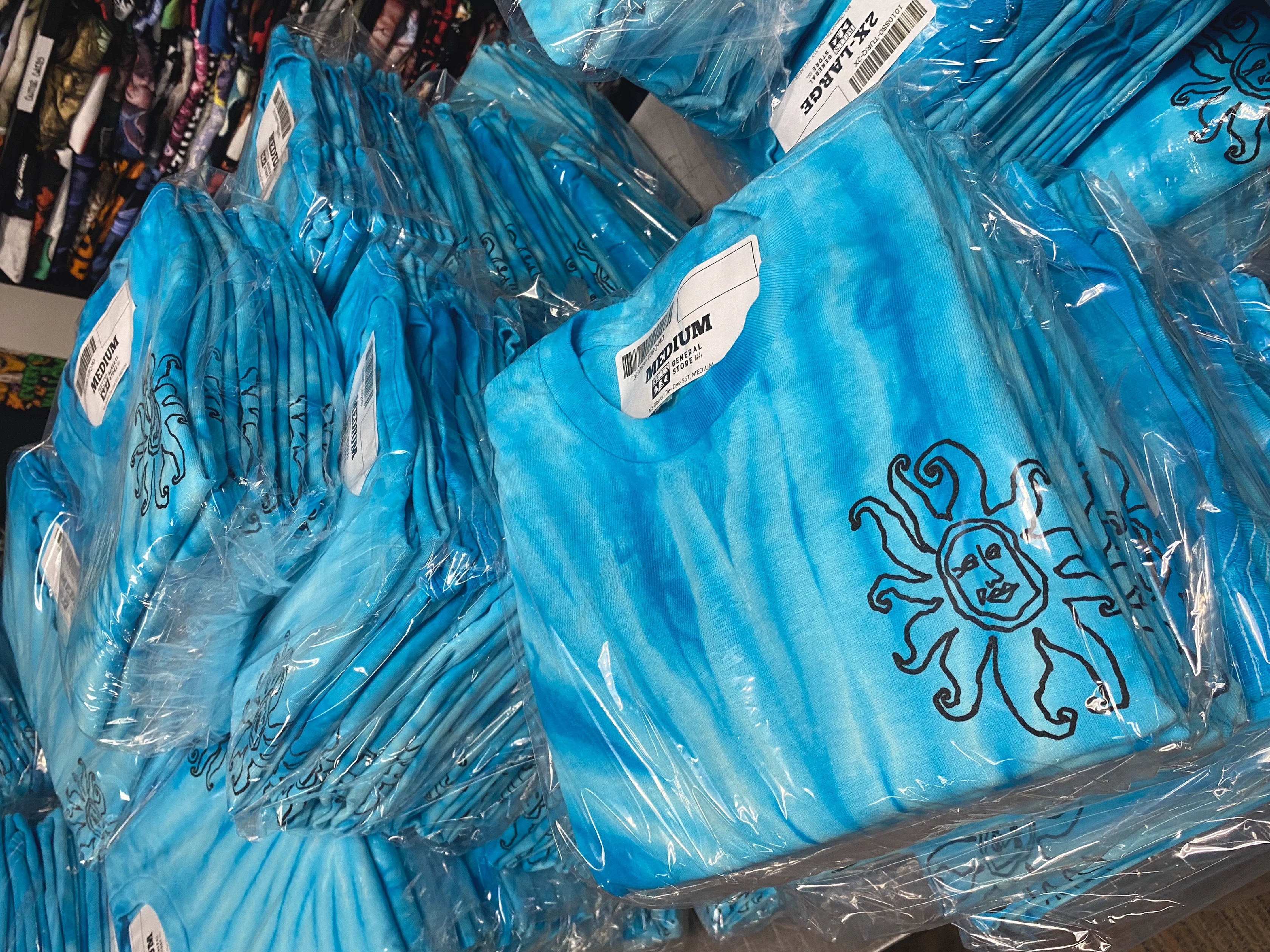
Removing manufacturer tags and replacing them with custom-printed neck labels immediately elevates perceived quality. Your audience sees your brand inside the garment, not Gildan or Bella+Canvas branding.
Apparel finishing services include custom neck labels, signal professional production, and support premium pricing strategies.
Custom hang tags serve multiple purposes - they complete the retail presentation, provide care instructions, and create photo-worthy unboxing moments. Influencers know presentation matters for content creation and customer experience.
Quality hang tags attached to folded, bagged garments create expectations of premium quality before customers even see the actual print.
Individual poly bags protect products during shipping and storage while creating a clean, professional presentation. For creators fulfilling directly or through third-party logistics, poly bags maintain product condition and simplify inventory handling.
Professional fold-and-bag services ensure consistent presentation across all units. This consistency matters for maintaining brand standards and creating repeatable unboxing experiences your customers photograph and share.
Complete finishing - custom labels, hang tags, poly bags, and professional folding - enables retail-style pricing and presentation. You're not just selling printed shirts; you're selling branded products worthy of boutique pricing.
This finishing investment typically adds a modest per-unit cost but can justify significantly higher retail prices. The margin improvement often far exceeds the finishing expense.
Successful creator merchandise production depends on clear communication and realistic expectations with your printing partner.
Clear communication prevents delays and errors. Provide exact garment specifications, design files in appropriate formats, color requirements, and print placement details. Share your brand vision and aesthetic goals so your production partner understands what you're trying to achieve.
Professional screen printing requires proper file preparation. Vector files work best for text and simple graphics. High-resolution raster images are needed for photorealistic work. Your production partner can guide file specifications, but investing time in proper file prep prevents quality issues.
For first-time designs or complex projects, sample approval ensures the final product matches your vision. Seeing and feeling an actual printed sample before full production prevents disappointments and costly remissions.
Many creators photograph samples for content purposes before approving full production - this serves both quality control and marketing needs.
Design changes mid-production cause delays and may incur additional costs. Finalize designs completely before production begins. If changes become necessary, understand their impact on timeline and pricing before proceeding.
Professional production partners provide updates on order progress. However, constant check-ins can slow down their workflow. Establish clear communication points - order confirmation, production start, and completion - rather than requesting daily updates.
Once your inventory exists, you need to get it to customers. Several fulfillment models work for different creator scales and preferences.
Many creators start by fulfilling orders themselves. This maintains direct customer connection and complete control but requires time, space, and organizational systems. Self-fulfillment works well for smaller drops or creators who view packing as community engagement.
As volume grows, third-party fulfillment services handle storage, packing, and shipping while you focus on content creation and marketing. These services typically charge per unit stored and per order fulfilled.
Evaluate 3PL services based on minimum requirements, integration with your e-commerce platform, shipping rates, and inventory management systems.
Some screen printing operations offer blind shipping - shipping finished products directly to your customers with your branding on the packaging. This eliminates the step of shipping bulk inventory to you or a fulfillment center first.
Blind shipping works well for drops with pre-orders where you're not maintaining ongoing inventory. Orders ship as production completes, reducing handling steps and your storage needs.
Many creators use hybrid fulfillment - self-fulfilling local orders or special packages while using 3PL for standard orders. This balances personal touch with operational efficiency.
Understanding the economics helps you decide when bulk production makes sense for your specific situation.
For creators selling moderate monthly volumes, POD remains practical. The convenience and zero inventory risk often outweigh margin limitations when total monthly revenue is limited.
As monthly sales increase, bulk production economics become compelling. The per-unit cost advantage creates meaningful margin improvements that fund better products, more designs, or marketing investment.
Calculate your potential savings by comparing POD costs to bulk screen printing quotes at realistic order quantities. Include finishing services in bulk quotes for accurate comparison - the complete package often still provides better margins than basic POD.
For creators moving significant monthly volume, bulk production becomes essential for maintaining healthy margins. At higher volumes, the quality, margin, and customization advantages of screen printing far outweigh the inventory management requirements.
Don't compare just printing costs. Include storage, fulfillment, returns, and your time in the calculation. Sometimes POD's convenience justifies slightly lower margins. Other times, bulk production's advantages clearly outweigh the additional management required.
Understanding what works well in influencer merch helps you create products your community actually wants to buy and wear.
Clean text-based designs with simple graphics perform consistently well across creator niches. These designs photograph beautifully on social media, work across multiple garment colors, and appeal to broader audiences beyond core fans.
Merch that references community inside jokes or catchphrases creates belonging for your audience. These designs may not make sense to outsiders - that's the point. They signal community membership and create conversation starters.
The most successful creator merch balances brand identity with general wearability. Products people actually wear in everyday life provide ongoing brand visibility rather than sitting in drawers.
One exceptional design with premium finishing outsells three mediocre options. Focus on making products you genuinely love rather than offering extensive catalogs of average items.
Your merch should reflect your content aesthetic and personal style. Forced designs that don't align with your brand identity rarely perform well, even if they follow trends.
Learn from these frequent creator merchandise missteps.
Running out of popular sizes creates frustration and lost sales. Study your POD data carefully and potentially overweight popular sizes when planning inventory.
Your first bulk screen printing order doesn't need to include six designs in five colors each. Start with one or two proven designs. Build complexity as you gain production experience.
The cheapest blank garments often create problems - shrinkage, poor fit, or quality inconsistent with your brand positioning. Mid-tier blanks offer much better quality without dramatically higher costs.
Rushing production creates stress and often leads to quality compromises. Plan launches with comfortable timelines that accommodate unexpected delays.
Saving money by skipping custom labels and finishing undermines your premium positioning. The cost difference is modest but the perceived value difference is significant.
Influencer merchandise printing through professional screen printing represents the scale-up moment when your merch program transitions from testing to serious revenue generation. Understanding production minimums, realistic timelines, and finishing options empowers you to create products your community genuinely loves - products worthy of premium pricing and social sharing.
Ready to launch professional-quality merch that your community will love? Get instant pricing on photorealistic printing and retail-ready finishing - perfect for influencer drops and limited releases through our quote builder. Or contact our team to discuss your specific brand vision and production needs.
Minimum order quantities vary based on printing technique and design complexity. Basic screen printing with a few colors typically requires moderate minimums that make sense for mid-tier creators with established audiences. Photorealistic designs using simulated process printing generally need slightly higher minimums due to the technique's complexity. For creators with smaller followings who need lower minimums, DTF transfer options bridge the gap between print-on-demand and full screen printing, typically starting around 15 pieces. The key is matching your minimum to realistic sales projections based on your audience size and historical merch performance. Many creators successfully start with modest quantities to test demand before scaling up to larger production runs with optimized inventory.
Complete production timelines depend on several factors, including order complexity, current production schedules, and finishing services. A typical timeline includes design finalization and file preparation, production and quality checking, finishing services if applicable, and shipping. Smart creators build buffer time between receiving inventory and launch announcements - receiving your merch with adequate lead time before your planned drop date gives comfortable time to create launch content without rushing. Rush production exists but usually carries premium pricing and may limit customization options. For best results and lowest stress, plan launches with realistic lead times rather than trying to rush production. Starting conversations with production partners early helps you understand what timelines are realistic for your specific project.
The answer depends on your current scale and goals. Print-on-demand makes sense when you're testing designs, have a limited following, or want zero inventory risk. POD lets you learn what your community responds to without financial risk. However, as your brand grows and monthly sales increase, bulk screen printing becomes more attractive because per-unit costs drop significantly at moderate quantities, quality improves with professional printing techniques, you gain control over launch timing and fulfillment, and finishing options justify higher retail prices. Many successful creator brands start with POD to validate demand, then transition to bulk screen printing once they're consistently moving significant units. The transition point typically happens when the margin limitations and quality constraints of POD start limiting your brand growth.
Finishing services transform basic printed products into premium merchandise worthy of higher prices. Custom printed neck labels remove manufacturer branding and establish your brand identity inside garments. Hang tags complete retail presentation and create photogenic unboxing moments your audience shares on social. Individual poly bags protect products and create a clean, professional presentation. Professional folding ensures a consistent appearance across all units. The investment in complete finishing typically adds a modest per-unit cost but enables significantly higher retail pricing - the margin improvement usually far exceeds the finishing expense. Finishing services are especially important for influencers because your audience expects premium quality and creates content around unboxing experiences. Skipping finishing to save money often undermines your premium positioning and leaves money on the table through lower achievable retail prices.
Start with your POD sales data - how many units did proven designs sell over what timeframe? Use this historical performance to project realistic demand. For size distribution, general market data suggests most sales cluster in medium and large, moderate sales in small and extra-large, and limited sales in extended sizes. However, your specific audience might vary - track your actual POD size sales rather than guessing. Consider whether you're launching as a limited drop or maintaining ongoing availability. Drops let you create urgency with defined inventory while preventing stale stock. Many creators order moderately for initial launches, gauge response, then reorder with optimized size distributions based on actual sales. This reduces risk while still accessing better pricing and quality than POD. Don't over-order based on optimism - realistic projections based on data prevent costly inventory problems.

