


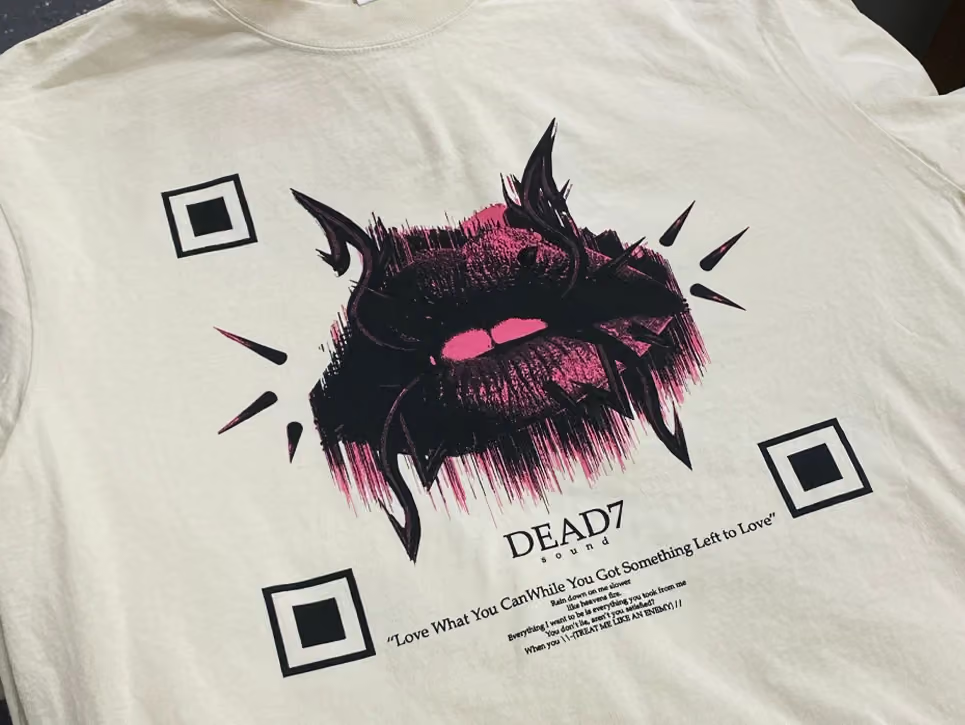
Plastisol screen printing represents the industry standard for custom apparel decoration, combining PVC resin with plasticizers to create durable prints that withstand 100+ washes while maintaining vibrant colors. This versatile ink technology offers unparalleled durability, vibrant color reproduction, and production efficiency through our professional screen printing services.
Since 2007, Extreme Screen Prints has perfected plastisol screen printing with 15+ years of expertise, achieving 95% customer satisfaction and 95% on-time delivery across 10,000+ completed projects. Our 20,000+ square-foot climate-controlled facility houses ROQ automatic presses with 0.5mm registration precision, ensuring consistent quality whether you need 12 pieces or 10,000+ for your apparel program.
The technical characteristics that make plastisol the industry standard include exceptional color vibrancy, opaque coverage on dark fabrics, specialized effect capabilities, and production consistency. The 310-320°F curing temperature and 30-45 second curing time create efficient workflows supporting both small boutique runs and large-scale manufacturing through our expert screen printing services.
This comprehensive guide reveals plastisol's technical properties, production advantages, and strategic applications, explaining its continued market dominance and why brands trust Extreme Screen Prints for their custom apparel printing needs.
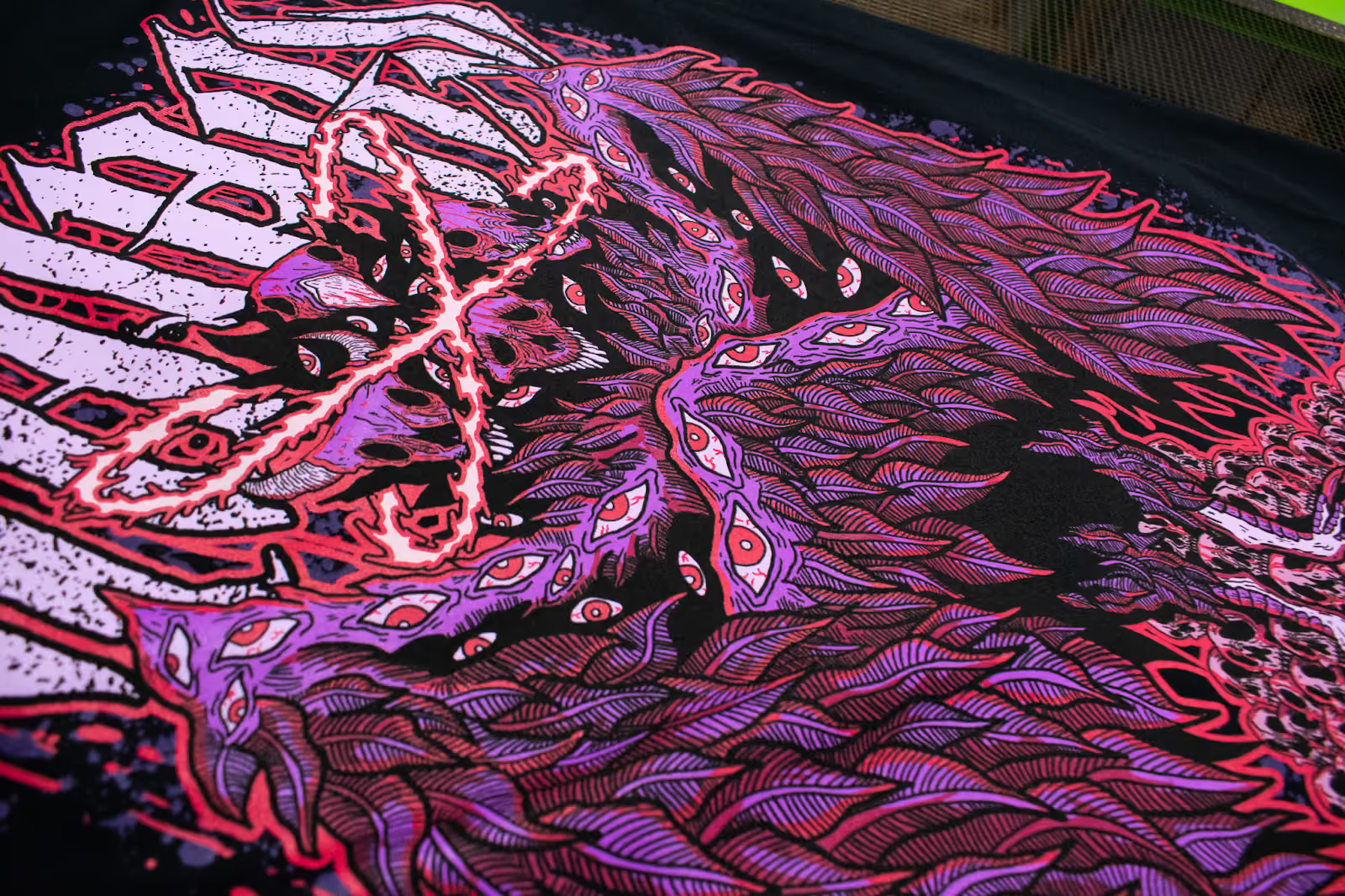
Plastisol ink combines PVC resin with plasticizers, creating flexible, durable prints that withstand extensive wear and repeated washing. Unlike water-based inks, which absorb into fabric, plastisol screen printing leaves flexible plastic layers on fabric surfaces, maintaining color intensity and detail definition. This surface application creates opacity and vibrancy, making plastisol effective on dark fabrics where other inks struggle to achieve coverage.
The curing process transforms plastisol from liquid to solid by thermal activation at 310-320°F for 30-45 seconds, creating permanent bonds while maintaining flexibility and preventing cracking. Professional operations maintain specialized plastisol formulations optimized for different applications—softer blends for fashion fabrics, durable formulations for athletic wear, and specialized blends for performance textiles through our professional screen printing services.
Pantone color matching is a significant advantage of plastisol screen printing, with professional operations maintaining 300+ pre-mixed Pantone colors that provide exact matching across production runs. This color consistency ensures brand integrity, whether you're producing 12 pieces for a local team or 10,000+ pieces for national distribution. Color opacity characteristics make plastisol particularly effective on dark fabrics, providing excellent coverage and allowing vivid reproduction without underbase printing.
Color-mixing capabilities enable virtually unlimited color options within plastisol systems, supporting both standard brand colors and custom specialty formulations. Our 15+ years of experience include extensive color expertise, ensuring accurate reproduction across multiple production runs while maintaining the exact shade specifications your brand requires.
Puff printing enables dimensional effects, adding tactile interest and visual prominence that commands premium pricing in the marketplace. Puff additives create raised surfaces that expand during curing, creating three-dimensional effects that customers can feel and see, enhancing perceived value. Metallic and pearlescent effects create premium visual appeal, valuable for fashion collections and corporate apparel seeking sophisticated brand presentation.
Fluorescent and glow-in-the-dark capabilities create attention-grabbing effects for safety apparel and event merchandise. High-density printing creates substantial textures and dimensional impact that digital printing cannot replicate, establishing clear differentiation in crowded markets. These specialized effects, combined with Extreme Screen Prints' durable screen-printing expertise, create products that stand out both visually and physically.
Plastisol screen printing enables efficient production workflows, supporting both small boutique runs and large-scale manufacturing without compromising quality. Consistent curing parameters of 310-320°F for 30-45 seconds allow predictable scheduling and reliable delivery timelines. Setup efficiency represents another key advantage—plastisol can be printed in rapid succession with minimal drying requirements between colors, reducing production time and cost while maintaining our 95% on-time delivery rate.
Print-on-demand capabilities enable flexible production models, reducing inventory waste and minimizing financial risk for clothing brands. Plastisol's consistent curing and fast setup times make it ideal for just-in-time production, enabling small batches to be produced efficiently. Professional operations can accommodate orders as small as 12 pieces while maintaining the same quality standards as large production runs.
Micro-registration systems maintaining 0.5mm tolerance enable precise multi-color printing with plastisol inks, creating sharp, clear designs with perfect alignment across multiple colors. Screen mesh optimization using 156-200 mesh count ensures optimal ink deposition and detail reproduction, whether you're printing fine text or bold graphics. Professional operations maintain comprehensive mesh inventories and recommend optimal selections based on design complexity and fabric type.
Squeegee and press settings specifically calibrated for plastisol ensure consistent ink deposition across production runs. Professional operations with 15+ years of plastisol experience have developed optimized settings that provide consistent results across diverse applications. Curing system optimization ensures complete plastisol polymerization regardless of fabric type or print size, preventing common issues such as undercuring or cracking.
Multi-stage inspection processes ensure plastisol prints meet exacting quality standards before delivery, contributing to our 95% customer satisfaction rate. Professional operations implement comprehensive quality control, including registration verification, color accuracy checks, and fabric integrity testing. Durability testing validates performance characteristics across different use conditions, with quality plastisol-printed products achieving 100+ wash lifespans that exceed customer expectations.
Color consistency verification ensures that brand requirements are met across production runs using spectrophotometers and color-measurement devices. Fabric compatibility testing ensures optimal performance across diverse substrate types, including cotton blends, polyester, and performance fabrics. These quality control processes, combined with our climate-controlled facility at 68-72°F and 45-55% humidity, create the ideal environment for consistent plastisol screen printing production.
Team uniform programs represent one of plastisol screen printing's strongest market segments due to exceptional durability and vibrant color reproduction. Sports uniforms require frequent washing and intense activity, making plastisol's 100+ wash lifespan and abrasion resistance particularly valuable. Opaque coverage ensures team colors remain visible on dark uniforms through our professional screen printing services, maintaining brand identity throughout the season.
Performance apparel applications benefit from plastisol's flexibility and durability, which allow it to stretch with athletic movement without cracking or fading. Professional operations develop specialized plastisol formulations optimized for performance fabrics, ensuring prints maintain appearance and functionality during athletic activities. Safety and visibility applications leverage fluorescent and reflective capabilities to enhance wearer visibility in low-light conditions, support athlete safety, and enable team identification.
Corporate uniform programs rely on plastisol's consistent quality and professional appearance to maintain brand standards across diverse employee groups and geographic locations. Precise Pantone matching ensures corporate colors remain consistent across all uniform items, supporting brand recognition and professional image. Trade show and event apparel leverages visual impact, creating memorable brand impressions in competitive environments where standing out matters.
Executive and client-facing gifts utilize premium materials, creating sophisticated branded items that reflect positively on corporate image and business relationships. Workwear and industrial applications benefit from durability and resistance to workplace conditions, with abrasion resistance making plastisol ideal for construction, manufacturing, and service industry uniforms where longevity matters.
Streetwear and urban fashion leverage plastisol's premium effects and bold color reproduction, creating distinctive apparel that defines market categories and commands premium pricing. The combination of standard custom apparel printing with specialized effects creates dimensional, attention-grabbing designs that establish brand identity and cultural relevance. Fashion designers appreciate plastisol's ability to reproduce complex designs with consistent quality across production runs.
Limited-edition drops and collectible fashion items leverage plastisol's unique capabilities, creating exclusivity and collector appeal that drive demand and secondary-market value. Artist collaborations and licensing partnerships benefit from color accuracy and detail reproduction. helping maintain brand integrity across merchandise applications. These creative applications demonstrate plastisol's versatility beyond basic printing, supporting artistic expression and brand storytelling.
Plastisol screen printing offers superior durability, with a 100+ wash lifespan compared to 30-40 for water-based inks, creating long-term value for customers and brands. Coverage capabilities on dark fabrics create a significant advantage—plastisol's inherent opacity allows single-pass printing, while water-based printing often requires an underbase, increasing production time and cost. Production speed favors plastisol due to its 30-45 second curing time versus the extended drying requirements of water-based inks.
Special effects capabilities demonstrate plastisol's versatility, offering puff, metallic, fluorescent, and glow-in-the-dark options, while water-based excels at soft vintage effects. This versatility enables a broader range of design applications and premium product differentiation, supporting higher pricing and market positioning. While water-based inks excel at soft hand feel, plastisol provides superior durability and visual impact.
Color vibrancy differences create distinct advantages—discharge creates soft vintage effects, while plastisol provides vibrant, opaque coverage that maintains intensity over time. Fabric compatibility significantly affects discharge printing: it works optimally only on 100% cotton fabrics, whereas plastisol performs well across diverse fabric types, including blends and performance textiles, with no fabric restrictions.
Production complexity favors plastisol with consistent curing parameters versus discharge, requiring precise fabric testing and specialized procedures for each garment type. Long-term appearance maintenance favors plastisol for applications where color retention and durability are critical, ensuring branded apparel maintains a professional appearance throughout its useful life.
Production-volume efficiency favors plastisol for medium to large runs, becoming cost-effective above 24 pieces while maintaining consistent quality throughout production. Durability creates clear advantages—plastisol maintains appearance through 100+ washes, compared with 20-30 for most digital printing methods, providing better long-term value for customers. Special effects capabilities demonstrate plastisol's tactile advantages with puff, metallic, and dimensional elements that digital printing cannot replicate.
Color consistency across production runs favors plastisol for applications requiring exact brand color matching, while digital printing may show variations between runs and devices. Production speed and scalability favor plastisol for larger orders, with our 10,000+ piece daily capacity supporting major brand launches and distribution needs without compromising quality or delivery timelines.
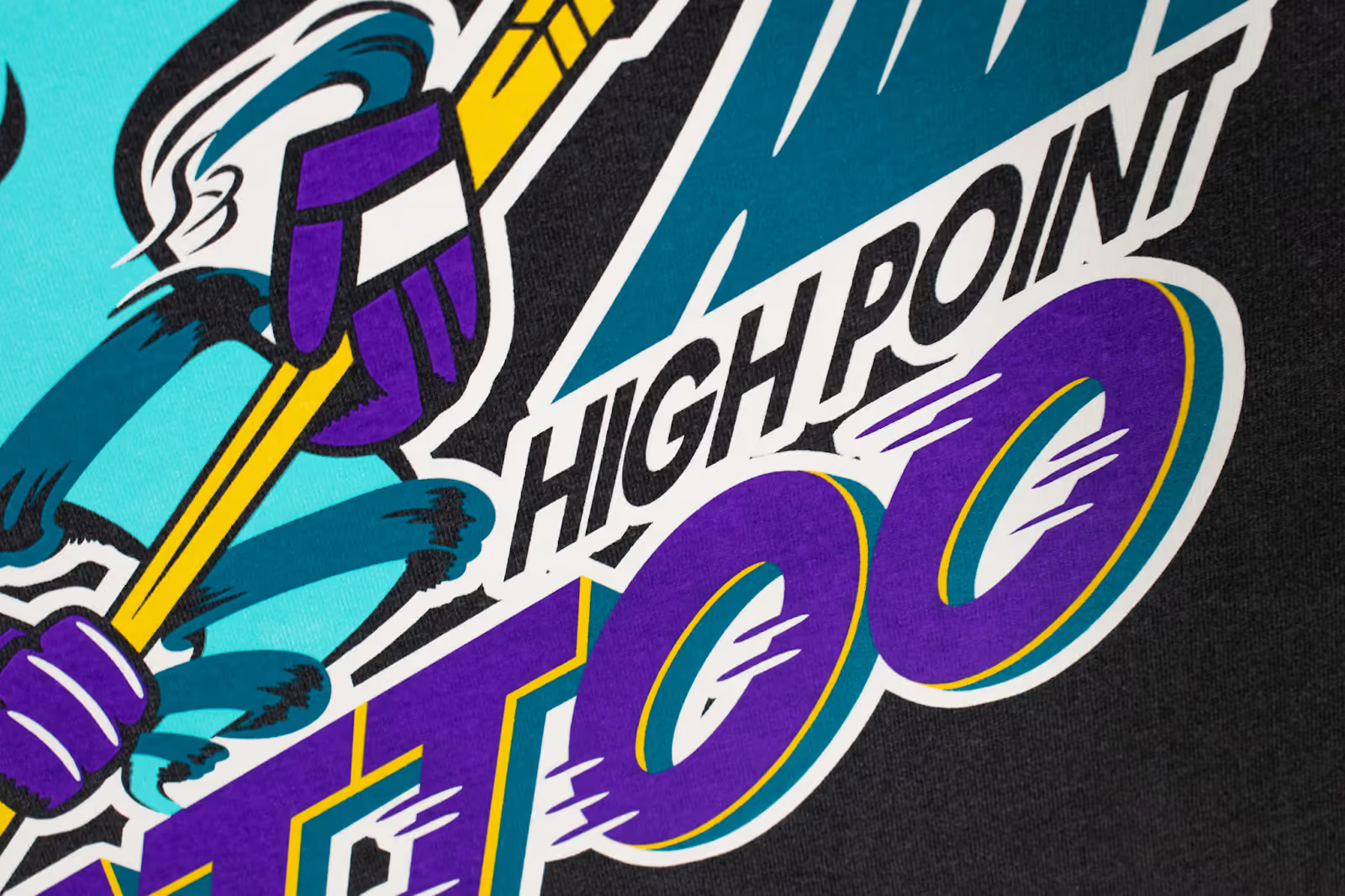
Setup costs for plastisol screen printing include screen preparation and equipment calibration, typically $25-$75 per color, with professional operations providing transparent pricing. Per-unit pricing decreases with volume—small orders (12-24 pieces) range $8-$15, while larger orders (100+ pieces) reduce to $3-$7, making plastisol increasingly cost-effective at scale. Material costs vary based on garment quality and ink complexity, with specialized effects adding $0.50-$2 per unit for premium applications.
Value considerations extend beyond immediate costs to include longevity, with plastisol's 100+ wash lifespan reducing replacement frequency and total cost of ownership. Production efficiency gains translate to faster turnaround times and reduced labor costs compared to alternative methods that require longer processing times. These cost advantages, combined with quality consistency, create compelling value propositions for brands seeking both quality and cost-effectiveness.
Brand consistency value extends across plastisol applications, creating measurable business benefits beyond immediate product sales through enhanced brand recognition and customer loyalty. Perceived value enhancement justifies premium pricing strategies—fashion brands often achieve 50-100% price premiums for plastisol-printed items due to superior durability and visual appeal. Longevity reduces replacement costs, with a 100+ wash lifespan compared to alternatives that require frequent replacement.
Customer satisfaction metrics improve with plastisol applications due to consistent quality and durability, driving repeat business and brand loyalty. Market positioning advantages enable premium pricing and competitive differentiation, supporting higher profit margins and brand equity development. These ROI factors combine to create compelling business cases for investing in quality plastisol screen printing for brand apparel programs.
Quality differentiation creates sustainable competitive advantages in crowded markets where visual impact and durability matter to customers. Production scalability supports business growth from small boutique runs to large-scale manufacturing without compromising quality consistency. Technical capability barriers create natural market protection requiring equipment investment and expertise, preventing smaller competitors from replicating quality standards that meet customer expectations.
Brand reputation benefits from consistent quality and durability, enhancing perceived value and customer trust in product quality. Market expansion opportunities arise from production capacity and expertise, enabling entry into new market segments that require higher quality standards. These positioning advantages combine to create sustainable competitive differentiation based on quality rather than price competition.
What makes plastisol screen printing the industry standard for custom apparel?
Plastisol screen printing became the industry standard due to exceptional durability (100+ wash lifespan), vibrant color reproduction, production efficiency, and versatility across fabric types. Consistent curing parameters, opaque coverage on dark fabrics, and specialized effects create reliable results that alternative technologies struggle to match. Extreme Screen Prints' 15+ years of expertise and 95% customer satisfaction rate demonstrate plastisol's reliability for professional apparel programs.
How does plastisol compare to water-based screen printing in terms of durability?
Plastisol offers superior durability (100+ washes vs. 30-40 washes), better coverage on dark fabrics, and faster production times. Water-based inks excel at soft, vintage effects but may require underbase printing and may fade after 30-40 washes. Choice depends on desired aesthetic effects, durability requirements, and fabric types. For applications requiring long-term durability and consistent color, plastisol provides superior value and performance.
What are the main advantages of plastisol screen printing for clothing brands?
Key advantages include exceptional durability with 100+ wash lifespan, vibrant color reproduction, opaque coverage on all fabric colors, specialized effects capabilities (puff, metallic, fluorescent), efficient production workflows, and consistent quality across volumes. These benefits make plastisol valuable for sports apparel, corporate uniforms, and premium fashion applications where longevity and brand consistency matter.
What types of special effects can be created with plastisol inks?
Plastisol enables puff printing for dimensional effects, metallic and pearlescent inks for a premium appearance, fluorescent colors for high visibility, glow-in-the-dark effects for safety applications, and high-density printing for substantial textures. These effects expand versatility beyond standard applications and create premium products commanding higher prices and market differentiation.
How durable are plastisol prints compared to other printing methods?
Quality plastisol prints maintain appearance through 100+ washes, significantly outperforming water-based inks (30-40 washes) and most digital printing methods (20-30 washes). This durability makes plastisol ideal for frequent wear, athletic applications, or long-term appearance retention. Our 95% customer satisfaction rate reflects the consistent quality and durability our customers expect from professional screen printing.
What fabrics work best with plastisol screen printing?
Plastisol performs excellently across diverse fabric types, including cotton, blends, performance fabrics, and specialty textiles. Unlike discharge inks requiring 100% cotton, plastisol works well on most fabric compositions without special preparation, making it versatile for various apparel applications and market segments. This versatility eliminates fabric restrictions and simplifies production planning for mixed-fabric orders.
How do you ensure consistent quality across large production runs?
Professional operations implement multi-stage inspection processes including registration verification, color accuracy checks using spectrophotometers, and fabric integrity testing. Consistent curing parameters of 310-320°F for 30-45 seconds ensure predictable results regardless of production volume. Our climate-controlled facility and ROQ automatic presses maintain consistent quality from small runs to our 10,000+ piece daily capacity.
What are the most common applications for plastisol printing services?
Sports and athletic apparel represent the strongest market segment due to exceptional durability and frequent washing requirements. Corporate uniforms benefit from consistent Pantone color matching, maintaining brand standards across multiple locations. Fashion and streetwear applications leverage premium effects such as puff, metallic, and high-density printing, creating distinctive market positioning and a premium brand identity.
How does temperature affect the quality of plastisol printing and curing?
The curing temperature must be precisely maintained at 310-320°F for proper polymerization, creating permanent bonds between the ink and the fabric. Professional operations use multi-zone conveyor dryers with precise temperature control, ensuring complete curing without fabric damage. Ambient temperature and humidity (68-72°F, 45-55%) in production facilities affect ink viscosity and consistency, requiring climate-controlled environments for optimal results.
What environmental considerations should guide plastisol printing choices?
Modern plastisol formulations have evolved to be more environmentally friendly, with phthalate-free options available for brands seeking sustainable solutions. Professional operations implement proper ventilation and waste management systems, minimizing environmental impact. The long durability reduces environmental impact by extending product lifespan and reducing replacement frequency, supporting sustainability goals through reduced waste generation.
How should I care for plastisol-printed garments to maximize lifespan?
Wash plastisol-printed garments inside out in cold water with similar colors to protect printed surfaces. Tumble dry on low heat or hang dry to maintain print flexibility and prevent cracking. Avoid ironing directly on printed areas—iron inside out or use a protective cloth between the iron and the print. Following these care guidelines extends the 100+ wash lifespan and maintains a vibrant appearance throughout its lifecycle.
Experience the unmatched durability, vibrant color retention, and production efficiency of plastisol screen printing—the industry’s trusted standard for long-lasting, high-quality apparel. With lifespans exceeding 100 washes and compatibility across diverse fabrics, plastisol delivers consistent results that strengthen your brand image while reducing replacement costs. It's the reliable choice for businesses prioritizing performance, precision, and professional-grade quality.
Since 2007, Extreme Screen Prints has led the industry with 95% customer satisfaction and 95% on-time delivery across 10,000+ successful projects. Our 20,000+ square foot facility with ROQ automatic presses ensures your apparel receives precision craftsmanship at scale. Call (616) 202-1133 for immediate assistance and tailored recommendations for your printing needs.
Maximize your apparel program's visual impact and longevity with expert-guided plastisol solutions. Our specialists will assess your materials, goals, and brand standards to craft the perfect formulation. Contact Us to start your next high-performance print project today.

