


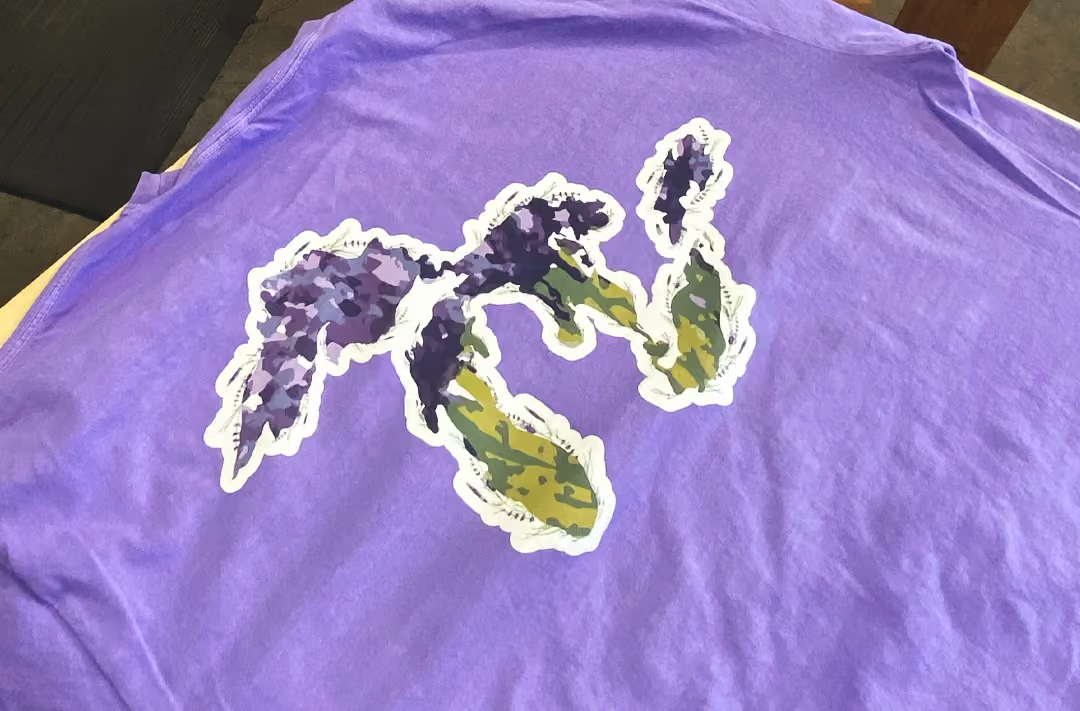
Plastisol screen printing continues to dominate the custom apparel industry despite eco-friendly alternatives and advances in digital printing. The answer lies in the exceptional durability, production efficiency, cost-effectiveness, and reliable performance that our professional screen printing services deliver across diverse applications—qualities that alternatives struggle to match consistently.
Since 2007, Extreme Screen Prints has perfected plastisol screen printing with 15+ years of expertise, achieving 95% customer satisfaction and 95% on-time delivery across 10,000+ completed projects. Our 20,000+ square-foot climate-controlled facility houses ROQ automatic presses with 0.5mm registration precision, ensuring consistent quality whether you need 12 pieces or 10,000+ for your apparel program.
In this competitive landscape, plastisol screen printing delivers measurable business benefits that outweigh the theoretical environmental advantages of newer technologies. Technical characteristics, including 100+ wash durability, consistent 310-320°F curing, opaque coverage across all fabrics, and production efficiency that supports both small runs and large-scale manufacturing, create practical advantages brands cannot easily replicate.
This comprehensive analysis reveals the practical, economic, and operational factors that sustain plastisol's market dominance through our expert screen printing services. Our success with out Contract Clients demonstrates how plastisol's reliability supports business growth—from their initial $300K revenue to the current $30M in annual sales through consistent quality and production excellence.
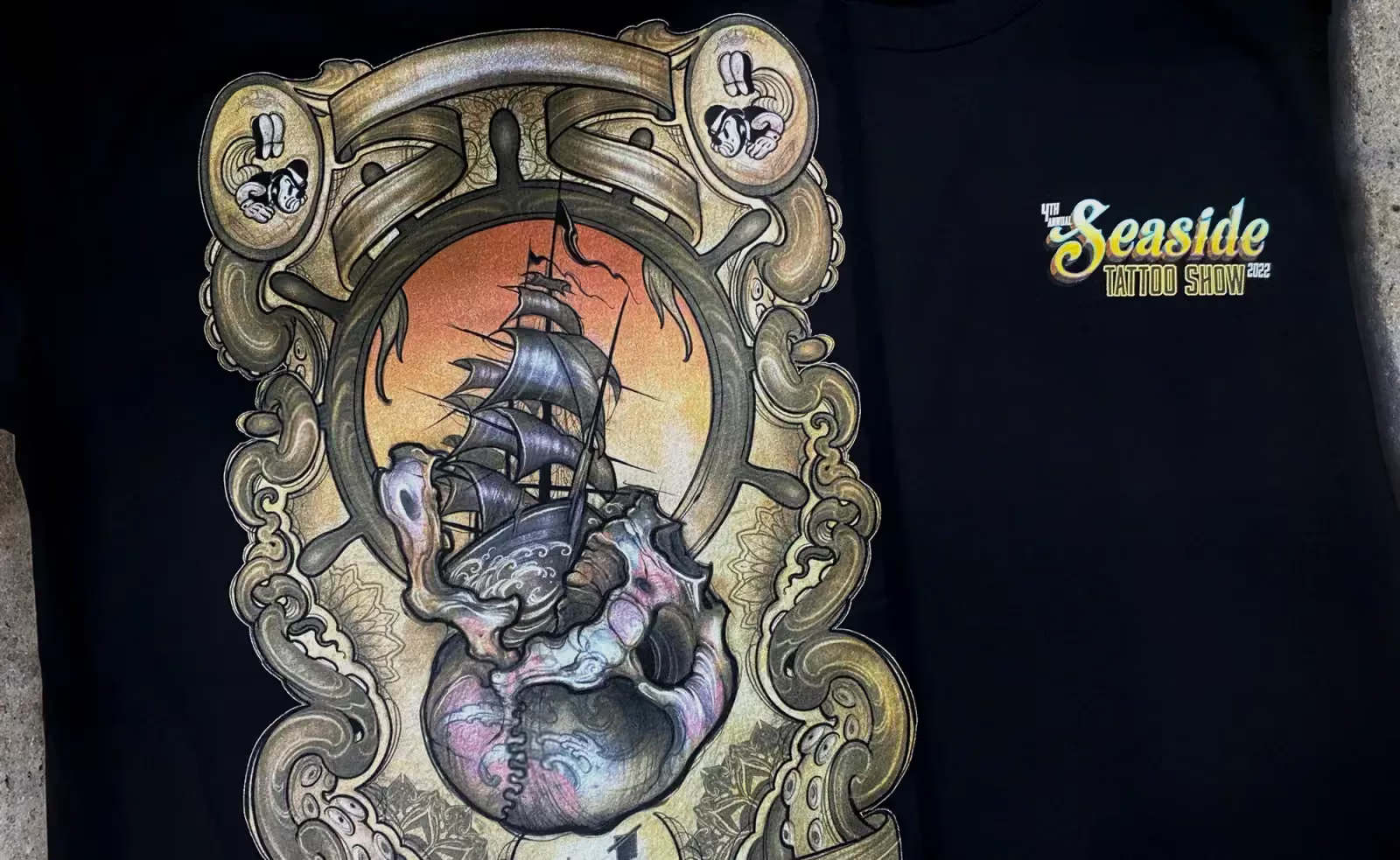
Equipment accessibility is a fundamental economic factor that sustains plastisol's market dominance. Standard screen printing presses and curing ovens cost $10,000-$50,000 for basic setups, making them accessible to small businesses and startups entering the custom apparel market. This contrasts sharply with water-based equipment, which requires expensive dryers and humidity control systems costing $100,000+, creating significant barriers to market entry.
Production efficiency delivers compelling advantages with consistent 30-45 second curing times, enabling rapid multi-color printing and high-throughput operations. Professional operations with multiple automatic presses process thousands of pieces daily while maintaining consistent quality, supporting both small boutique brands and large-scale manufacturers. Extreme Screen Prints' 10,000+ piece daily capacity demonstrates how plastisol efficiency scales to support major brand growth without quality compromises.
Material availability and supply chain reliability contribute significantly to plastisol's economic advantages. PVC resin, plasticizers, and pigments are widely available globally from multiple suppliers, creating competitive pricing and reliable distribution networks. This contrasts with specialized water-based formulations, which have limited supplier networks and higher costs, affecting both pricing and production reliability for businesses depending on consistent material supply.
Skill accessibility reduces training costs and accelerates workforce development, making plastisol operations more cost-effective than alternatives requiring specialized expertise. Standard plastisol techniques can be learned through basic training programs, allowing businesses to develop skilled workforces without extensive technical education or certification requirements. Production workflow standardization reduces labor costs and improves consistency across operators, ensuring uniform quality regardless of individual skill levels.
Professional operations like Extreme Screen Prints invest in comprehensive training programs that standardize production processes across all staff members. Our climate-controlled facility and ROQ automatic presses with 0.5mm precision create consistent production environments that reduce training complexity while maintaining our 95% quality standards across all production volumes.
Competitive pricing structures create accessible market entry points while maintaining profitability—small businesses can order 12-24 pieces at $8-$15, while large brands benefit from $3-$7 per-unit pricing on orders of 100+ pieces. This flexible pricing model supports diverse business models — from startups to established brands —ensuring plastisol accessibility across market segments and business sizes.
Value proposition clarity drives strong customer retention through consistent quality and durability that exceed customer expectations. The 100+ wash lifespan of plastisol prints provides measurable value that justifies premium pricing, while production consistency ensures reliable delivery timelines supporting business planning and inventory management. Our 95% on-time delivery rate demonstrates how Plastisol's reliability supports sustainable customer relationships and repeat business.
Superior wash resistance represents the most significant performance advantage sustaining plastisol's market dominance. Quality plastisol prints maintain appearance through 100+ washes with minimal fading, significantly outperforming water-based inks (30-40 washes) and digital printing (20-30 washes). This extended product lifespan provides customers with superior value, reducing replacement costs and increasing the perceived value of apparel purchases.
Abrasion resistance ensures a professional appearance through extended wear, benefiting sports uniforms, workwear, and children's clothing that require durability. Colorfastness and UV resistance protect prints from environmental degradation, maintaining brand consistency and visual appeal throughout the product lifecycle. PVC-based formulation provides excellent resistance to sunlight and cleaning chemicals, which would degrade alternative printing methods more quickly.
Dimensional stability ensures prints maintain registration accuracy and visual integrity throughout the product's lifespan, which is crucial for multi-color designs requiring precise alignment and consistent color reproduction across production runs.
Color vibrancy and opacity create a superior visual impact, distinguishing plastisol from alternatives that may compromise on color saturation or coverage quality. PVC-based formulation delivers excellent color saturation consistent across fabric types, ensuring brand colors reproduce accurately regardless of garment material or color. Professional operations maintain 300+ pre-mixed Pantone colors, providing exact color matching for brand consistency across all production runs.
Coverage capabilities on all fabric colors create design flexibility without limitations that constrain alternative printing methods. Plastisol's opaque coverage ensures vibrant reproduction on dark fabrics without underbase printing requirements, expanding design possibilities and reducing production complexity. Special effects versatility enables premium differentiation through puff printing, metallic inks, fluorescent colors, and glow-in-the-dark effects that alternative technologies cannot replicate effectively.
Batch-to-batch consistency ensures uniform quality across production runs, eliminating variability that plagues alternative technologies with more complex production requirements. Stable chemical composition yields consistent results regardless of production volume or timing, ensuring brand quality standards remain consistent across all orders and seasons. Equipment versatility enables production across diverse facility types without requiring climate-controlled environments, reducing operational costs and complexity.
Quality control simplicity reduces production complexity compared to alternative technologies requiring specialized testing and monitoring. Plastisol's predictable behavior enables straightforward quality control focusing on registration accuracy and color consistency, reducing quality assurance costs while improving production efficiency. Timeline reliability supports business planning with predictable delivery schedules, enabling accurate inventory management and coordinated marketing campaigns.
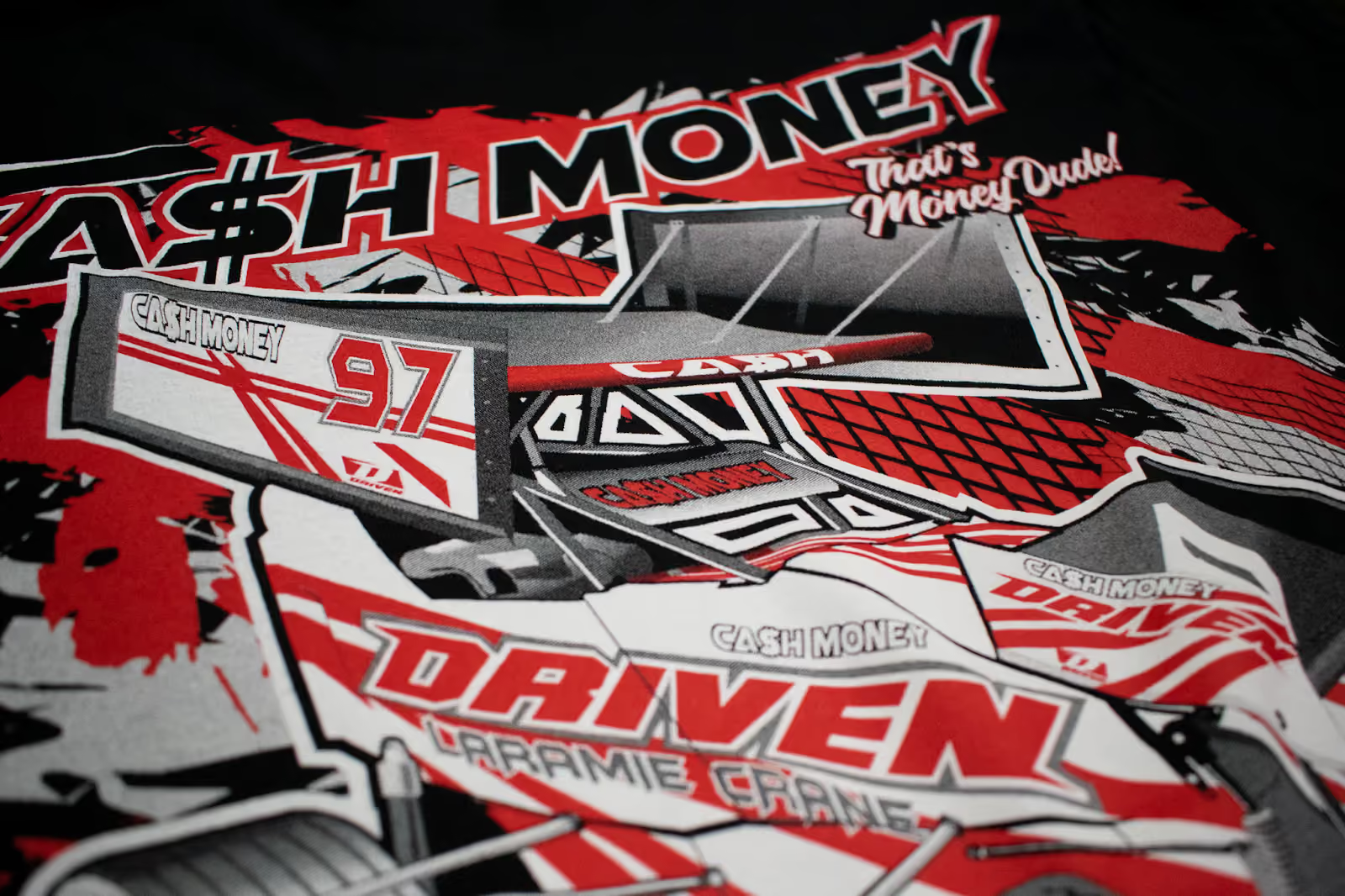
Raw material availability creates robust supply chains supporting plastisol dominance through reliable distribution networks and competitive pricing. PVC resin, plasticizers, and pigments are produced globally by multiple manufacturers, creating a competitive market that benefits print shops and brands through stable pricing and consistent material quality. Equipment manufacturing infrastructure supports worldwide adoption of plastisol through accessible technology distribution networks and established maintenance support systems.
Customer education reduces sales resistance—most apparel buyers understand the basics of plastisol and recognize quality characteristics that indicate superior printing. Performance familiarity builds customer confidence through proven durability and quality, reducing purchase anxiety and supporting repeat business. Market acceptance across diverse segments creates a broad customer base supporting a stable business foundation and predictable revenue streams.
Concerns about PVC-based materials represent legitimate environmental considerations that the industry addresses through continuous innovation and improvement. Professional operations acknowledge concerns while emphasizing performance benefits and durability that reduce environmental impact through extended product lifespan. Waste generation affects operations through screen cleaning and material waste, requiring reduction strategies and improved sustainability practices.
Sustainability innovation includes formulation improvements that address environmental concerns while maintaining the performance characteristics customers expect. Bio-based plasticizers and reduced-PVC formulations are being developed to reduce environmental impact without compromising durability or quality. Production process optimization reduces ecological impact by improving efficiency, implementing waste-reduction protocols, and deploying energy-efficient equipment that minimizes resource consumption while maintaining production capabilities.
Technology convergence creates hybrid approaches that combine plastisol's benefits with environmental considerations, allowing brands to balance competing priorities effectively. Professional operations offer mixed-technology solutions using plastisol for durability-critical elements while incorporating alternative inks for soft-touch effects or specific aesthetic requirements. This flexibility enables brands to optimize production based on specific application needs rather than technology limitations.
Consumer preferences evolve, influencing market dynamics, while demand for durable, high-quality apparel remains strong across demographics and market segments. Regulatory development shapes industry standards, with environmental regulations increasingly affecting all printing technologies and requiring compliance investments that favor established methods with proven safety records. Investment patterns indicate continued plastisol dominance with complementary technology adoption rather than complete replacement, suggesting a stable market position for the foreseeable future.
Why does plastisol screen printing remain the industry standard despite newer alternatives?
Plastisol screen printing dominance continues through exceptional durability (100+ washes), production efficiency, and cost-effectiveness across diverse applications. Equipment accessibility, material availability, and a skilled workforce create sustainable economic advantages that newer technologies struggle to match consistently. Extreme Screen Prints' 95% customer satisfaction rate and 15+ years of experience demonstrate how plastisol's reliability supports business success and customer retention.
What are the main disadvantages of plastisol screen printing compared to alternatives?
Primary disadvantages include environmental concerns about PVC-based materials, a less breathable feel compared to water-based inks, and potential cracking after extended wear if not properly cured. However, modern formulations have reduced many traditional issues while maintaining core performance advantages that customers value. Professional operations optimize processes to minimize these concerns while delivering the durability and consistency that brands require.
How does plastisol compare to water-based screen printing in terms of environmental sustainability?
Water-based inks generally have better environmental profiles than plastisol due to water-based chemistry and reduced chemical requirements. However, plastisol's superior durability means products last longer and require less frequent replacement, reducing overall environmental impact through extended product lifespan. Professional operations offer both technologies and recommend optimal solutions based on brand priorities, sustainability goals, and specific application requirements.
Is plastisol screen printing suitable for children's clothing with safety considerations?
Quality plastisol is considered safe for children's clothing when properly cured and tested in accordance with industry safety standards. Professional operations comply with safety regulations, including CPSIA standards, ensuring all printed garments meet strict safety requirements for children's products. Many parents choose plastisol for durability and longevity, though eco-conscious parents may prefer water-based alternatives for specific applications or sustainability preferences.
Will plastisol screen printing eventually be replaced by newer printing technologies?
As newer technologies continue to improve, plastisol's combination of durability, cost-effectiveness, and production efficiency ensures its continued market relevance across most commercial applications. The industry is likely to see increased technology integration, with different methods serving different applications based on specific requirements rather than complete replacement. Market evolution toward hybrid approaches demonstrates adaptability to changing priorities while maintaining core performance advantages.
How can brands balance environmental concerns with plastisol's proven performance benefits?
Brands can balance environmental considerations by using plastisol strategically for durability-critical applications while incorporating alternative technologies for other uses where performance requirements allow. Working with professional operations teams to implement environmental initiatives and sustainable practices reduces environmental impact while maintaining quality standards and customer expectations. The extended product lifespan provided by plastisol actually reduces overall environmental impact by decreasing replacement frequency.
What equipment investment is required for professional plastisol screen printing operations?
Basic plastisol setups require $10,000-$50,000 for screen printing presses, squeegee systems, and curing ovens, making technology accessible to businesses of all sizes. This accessibility contrasts with that of water-based equipment, which requires expensive dryers and humidity control systems costing $100,000+. Professional operations like Extreme Screen Prints maintain comprehensive equipment investments, including ROQ automatic presses and climate-controlled facilities, to ensure consistent quality and production efficiency.
How do labor costs and training requirements compare between plastisol and alternative printing methods?
Skill accessibility is lower for plastisol printing than for water-based printing, requiring specialized knowledge of fabric chemistry and environmental controls. Standardized workflows reduce labor costs and improve consistency across operators, making workforce development more efficient and cost-effective. Professional operations invest in training programs that standardize production processes across all staff members, ensuring consistent quality regardless of individual experience levels.
At what production volumes does plastisol provide optimal cost-effectiveness compared to alternatives?
Small to medium production runs (12-500 pieces) typically favor plastisol due to reasonable setup costs and efficient production scaling that optimizes per-unit pricing. Large runs (1000+ pieces) may favor digital printing for photorealistic designs that require complex color reproduction, while plastisol remains optimal for bold graphics and maximum durability, regardless of volume. Our production capacity of 10,000+ pieces daily demonstrates how plastisol scales effectively across all volume ranges.
How do quality control processes differ between plastisol and alternative printing technologies?
Plastisol's predictable behavior enables straightforward quality control focused on registration accuracy and color consistency, reducing complexity compared to alternative technologies that require specialized monitoring and testing. Alternative technologies may require complex chemical analysis, environmental monitoring, or specialized testing procedures, increasing quality assurance costs and production complexity. Professional operations maintain comprehensive quality control processes to ensure consistent results across all plastisol production runs.
What regulatory compliance considerations affect plastisol printing operations globally?
PVC-based inks have been used safely for decades with comprehensive safety testing and established regulatory approval frameworks worldwide. Professional operations maintain material safety data sheets and compliance documentation, ensuring regulatory approval across global markets. Worker safety protocols are well-established, reducing training costs compared to newer technologies with less comprehensive safety data and regulatory history.
How does technology convergence impact future market positioning for plastisol printing?
Technology convergence creates hybrid approaches that combine plastisol's benefits with environmental considerations, allowing brands to optimize production based on specific requirements. Professional operations increasingly offer mixed-technology solutions using plastisol for durability-critical elements while incorporating alternative inks for soft-touch effects or specific aesthetic requirements. This convergence allows brands to balance performance requirements with environmental considerations while maintaining production efficiency.
What market trends influence plastisol's continued dominance in the printing industry?
Consumer preferences evolve, shaping market dynamics, while demand for durable, high-quality apparel remains strong across demographics and market segments. Regulatory development shapes industry standards, with environmental regulations increasingly affecting all printing technologies and requiring compliance investments. Investment patterns indicate continued plastisol dominance with complementary technology adoption rather than complete replacement, suggesting a stable market position for businesses investing in proven printing technologies.
How should brands evaluate when to use plastisol versus alternative printing technologies?
Brands should evaluate based on specific application requirements, durability needs, budget considerations, and environmental priorities. Sports and athletic applications favor plastisol due to frequent washing requirements and intense physical activity conditions. Corporate and professional apparel may combine plastisol durability with alternative technologies for specific aesthetic requirements. Fashion markets leverage plastisol's bold visual impact while incorporating alternatives to foster aesthetic diversity and market segmentation.
Plastisol screen printing's industry-standard status reflects exceptional durability, production efficiency, and market advantages that sustain leadership despite emerging alternatives. Technical characteristics, including 100+ wash durability, consistent 310-320°F curing parameters, and versatile special effects, deliver practical value that outweighs theoretical environmental concerns for commercial applications that require reliable performance and consistent quality.
Since 2007, Extreme Screen Prints has perfected plastisol screen printing with 95% customer satisfaction and 95% on-time delivery across 10,000+ completed projects. Our 20,000+ square foot climate-controlled facility houses ROQ automatic presses with 0.5mm precision, ensuring your custom apparel receives the technical excellence and reliability your brand deserves. Our success with our Contract Clients demonstrate how plastisol's reliability supports business growth from $300K to $30M in annual revenue.
For print buyers evaluating options and sustainability-conscious brands balancing performance with environmental considerations, plastisol screen printing provides proven performance supporting business success across diverse applications. Market evolution toward hybrid approaches demonstrates adaptability to changing priorities while maintaining core performance advantages through our professional screen printing services.
Call (616) 202-1133 to discuss how plastisol screen printing can support your brand's requirements with proven performance backed by our 95% satisfaction guarantee. Our specialists recommend optimal solutions based on specific applications, environmental priorities, and quality standards, ensuring your apparel program achieves both performance excellence and business objectives.

